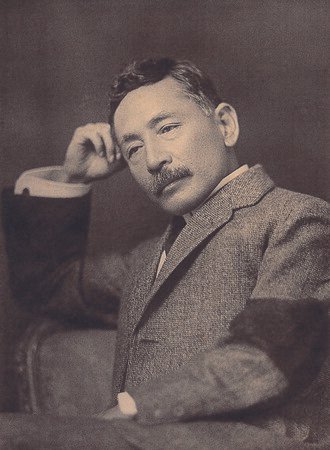
 AuthorNatsume Sōseki1867–1916
And Then is an 1909 novel by Natsume Sōseki, the second part of a trilogy completed by Sanshirō (1908) and The Gate (1910). It was serialised in the newspaper Asahi Shimbun between late June and mid-October 1909, and the following year appeared in book form. Its protagonist, Daisuke, is the son of a wealthy family who has graduated from a prestigious university but, at thirty, has no job and lives off his father's fortune.
The story opens with Daisuke awake, feeling for his pulse, and follows his meeting with two former university friends: Hiraoka, who left the civil service after a clash with his superior, and Terao, who once aimed to become a famous novelist and now translates and writes articles for little pay. Confronted with them, Daisuke questions why people work at all. His education has left him detached from traditional Japanese society, and from a modern one that sees schooling merely as the road to bureaucratic success. His family offers to keep supporting him if he marries a woman they have chosen, but he refuses both the marriage and the money.
It emerges that Daisuke has long loved Michiyo, Hiraoka's wife, whom he himself introduced to his friend. Out of pride, and not wanting to make Hiraoka a rival, he concealed his feelings and helped bring about the marriage. Later encounters with Michiyo suggest the attraction is mutual, and near the end she reproaches him for having given her up. Resolved, Daisuke proposes that they elope, and she agrees. The novel closes with him walking the street in search of work while the color red fills his vision, suggesting dread at betraying his friendship and severing his family ties for good.
Themes
Other works by Natsume Sōseki
- Kairo-kō 1905
- Botchan 1906
- The Three-Cornered World 1906
- Nowaki 1907
- Ten Nights of Dreams 1908
- Sanshirō 1908
- The Miner 1908
- The Wayfarer 1912
- Kokoro 1914
- Grass on the Wayside 1915
- I Am a Cat
Original Filopedia text based on Wikipedia (en) and Wikidata.