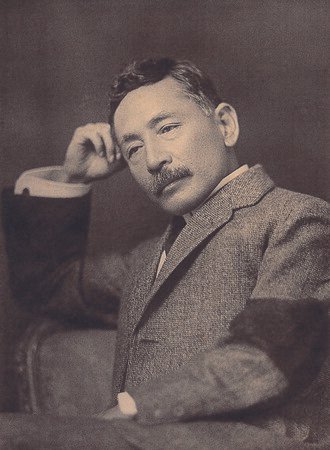
 AuthorNatsume Sōseki1867–1916
Ten Nights of Dreams (Yume jūya) is a series of short pieces by Natsume Sōseki, published in the newspaper Asahi Shimbun between July 25 and August 5, 1908. It is a brief, dreamlike work written when Sōseki was already a prominent figure in Japanese letters and was preparing to devote himself fully to the novel.
Each of the ten pieces recounts a dream of its protagonist, and the settings range across very different periods: from a mythic time, the "age of the gods," to the Kamakura period and the author's own present, the Meiji era. Four of the dreams open with the phrase "This is what I saw in my dream," which structures the sequence of episodes and gives them the air of an intimate chronicle. The blend of the fantastic, the symbolic and the everyday turns each night into a small parable about time, guilt, love, failure and death.
Among the best-known episodes are the one in which a dying woman asks to be buried and waited for for a hundred years, with time measured by a lily; the samurai who, unable to attain enlightenment, resolves to take the life of the priest who scorns him; and the sculptor Unkei carving the Niō guardians at Gokoku-ji, which the dreamer tries and fails to imitate. Other dreams, such as the man who throws himself from a ship or the old man who vanishes beneath the surface of a river, dwell on solitude, disorientation and the impossibility of fully understanding the world.
The work is among Sōseki's most singular for its brevity and its unreal atmosphere, and it is often read as a counterpoint to his urban and psychological novels. Critics have admired its ability to condense profound themes into a few pages, and its influence on the brief, symbolic writing of later Japanese literature.
Themes
Other works by Natsume Sōseki
- Kairo-kō 1905
- Botchan 1906
- The Three-Cornered World 1906
- Nowaki 1907
- Sanshirō 1908
- The Miner 1908
- The Wayfarer 1912
- Kokoro 1914
- Grass on the Wayside 1915
- I Am a Cat
- And Then
Original Filopedia text based on Wikipedia (en) and Wikidata.