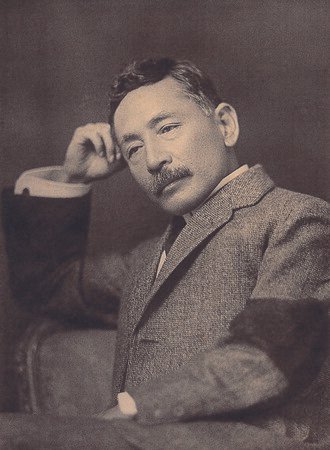
 AuthorNatsume Sōseki1867–1916
Kokoro is a novel by Natsume Sōseki, first published in 1914 as a serial in the Japanese newspaper Asahi Shinbun between 20 April and 11 August of that year. It is the last part of a trilogy that begins with Spring Equinox and Beyond and continues with The Wayfarer, both from 1912, though each can be read on its own. Set in the Meiji era, it centres on the bond between a young student and an older man whom he calls "Sensei" (teacher or master), who carries a secret tied to the death of a friend.
The title literally means "heart", but it also carries senses such as feeling, spirit or the heart of things. The serial version appeared as Kokoro: Sensei's Testament; when it was issued in book form, Iwanami Shoten shortened the title and wrote the word in hiragana rather than kanji. Sōseki explained in his preface that he had planned to gather several short stories, but the first one grew so long that he decided to publish it as a single work in three parts.
The first part, "Sensei and I", recounts the narrator's meeting with Sensei in Kamakura and the slow growth of their friendship in Tokyo, shaped by Sensei's reserve, his regular visits to a grave and his warning that admiration will end in disillusionment. The second, "My Parents and I", takes the protagonist to his family home in the countryside, where his father falls ill. The death of Emperor Meiji and the suicide of General Nogi mark the passage of time, and the tension between duty to family and personal desire becomes explicit in the young man's doubt about whether to stay or go to Tokyo.
The third part is a long confessional letter from Sensei. In it he recounts his youth: the early loss of his parents, the management of his inheritance by an uncle who squanders it, and his arrival in Tokyo, where he lodges with a widow and her daughter. There he meets K, a friend from his home town who breaks with the family that supported him in order to pursue his religious and philosophical interests, and who ends up living in the same boarding house. The romantic rivalry between the two men, and the guilt Sensei carries, form the moral core of the book.
The novel is presented as a near-autobiographical account, in the vein of the watakushi shōsetsu genre, then very popular. Its portrayal of the shift from traditional to modern values in Meiji society, the opposition between individual and group, and its themes of solitude, guilt and love have made it one of the great works of Japanese literature. Together with Osamu Dazai's No Longer Human, it ranks among the best-selling novels in Japan's history.
Other works by Natsume Sōseki
- Kairo-kō 1905
- Botchan 1906
- The Three-Cornered World 1906
- Nowaki 1907
- Ten Nights of Dreams 1908
- Sanshirō 1908
- The Miner 1908
- The Wayfarer 1912
- Grass on the Wayside 1915
- I Am a Cat
- And Then
Original Filopedia text based on Wikipedia (es) and Wikipedia (en) and Wikidata.