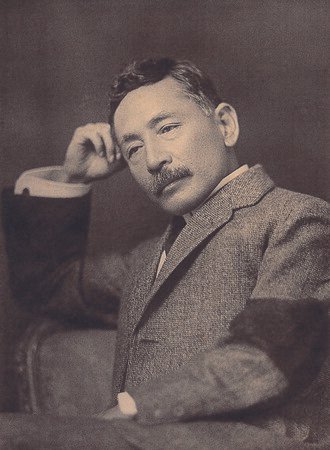
 AuthorNatsume Sōseki1867–1916
Kusamakura (1906) is a novel by Natsume Sōseki in which a painter retreats to the mountains in search of subjects and ends up staying at a remote, almost deserted inn. He becomes intrigued by its mysterious hostess, O-Nami, who reminds him of John Everett Millais's painting Ophelia. Ostensibly there to paint, he makes only a few sketches and instead writes poetry, which is woven into a text made of scenes from his secluded life and essay-like meditations on art and the artist's place in society.
In these reflections the narrator quotes and discusses Japanese, Chinese and European painters, poets and novelists, among them Wang Wei, Tao Yuanming, Bashō, Laurence Sterne, Oscar Wilde and Henrik Ibsen, and examines the difference between painting and poetry through Lessing's Laocoön. Chapter twelve also contains a tribute to the drowning suicide of Misao Fujimura, a former student of Sōseki, whom the narrator presents as having given his life for 'poetry'.
The Japanese title means 'grass pillow', a classical poetic term for journey. Written in the early middle period of Sōseki's career, the novel is considered one of his most experimental works and a key statement of his views on art. It has been translated into English several times under different titles.
Themes
Other works by Natsume Sōseki
- Kairo-kō 1905
- Botchan 1906
- Nowaki 1907
- Ten Nights of Dreams 1908
- Sanshirō 1908
- The Miner 1908
- The Wayfarer 1912
- Kokoro 1914
- Grass on the Wayside 1915
- I Am a Cat
- And Then
Original Filopedia text based on Wikipedia (en) and Wikidata.