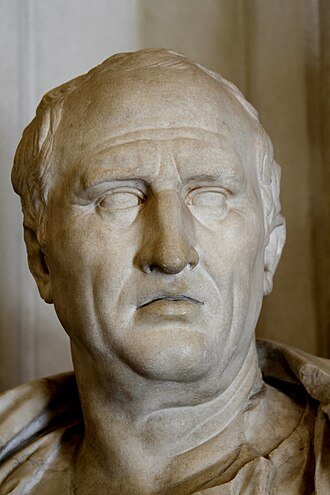
 AuthorCicero106 BC–42 BC
The Tusculan Disputations (Tusculanae Disputationes, also known as Tusculanae Quaestiones) are five books written by Cicero around 45 BC to popularise Greek philosophy in Rome, including Stoicism. They take their name from his villa at Tusculum, where they were reportedly composed.
The personal context is central. That same year his daughter Tullia died after childbirth. Her loss led Cicero to withdraw from public life and to devote himself to philosophical study at his country estates, first near Antium and then at Tusculum, where he also wrote other works such as the De finibus. He dedicated the work to his friend Brutus, an influential politician who would later assassinate Caesar. Cicero presents the text as a record of five days of discussions with friends, but the dialogues are very one-sided: the anonymous interlocutor only supplies the topic of each day and helps the transitions within it.
Each book takes up a question: the contempt of death, the endurance of pain, the relief of grief, the other disturbances of the mind, and whether virtue alone suffices for happiness. The passions are classified along Stoic lines as grief, fear, excessive joy and immoderate desire, all arising from false judgments about good and evil. The work is rich in allusions to ancient myth, Greek and Roman history, the sayings of sages and Latin poets. It is also the classic source of the story of the Sword of Damocles and of the phrase cultura animi, the agricultural metaphor for human cultivation.
Its influence was considerable. Boethius and Bernard of Cluny took up the theme of contempt for the world, and Saint Augustine cited it in his Confessions and in The City of God. Thomas Jefferson recommended it among the essential books for a personal library.
Themes
Other works by Cicero
Original Filopedia text based on Wikipedia (en) and Wikidata.