Religion within the Bounds of Bare Reason
philosophical treatise on religion and ethics · 1793
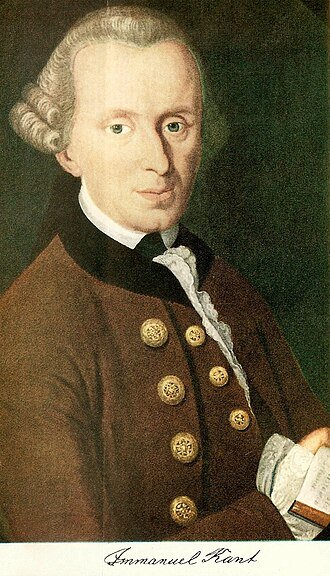 AuthorImmanuel Kant1724–1804
Religion within the Bounds of Bare Reason is a work by Immanuel Kant published in April 1793. Its starting point was an essay, "On the Radical Evil in Human Nature", which Kant had sent in 1792 to the journal Berlinische Monatsschrift and which forms the first part of the book. Three further parts were written to complete a set that Kant had originally conceived as a series of separate articles.
The context is religious censorship in Prussia. In 1791, King Frederick William II issued an edict restricting the teaching and publication of deist or Socinian doctrines. When the journal refused the second part, Kant chose to gather the four pieces into a book and published it with the approval of the philosophy faculty at the University of Jena, thereby bypassing review by theological censors. He was reprimanded for this, and in 1794 received a royal order forbidding him to write on religion, which he obeyed until the death of Frederick William II.
The book argues that human beings have an original predisposition to good but also an inclination to evil that Kant calls radical, since it affects the very foundation of moral maxims. Against this condition, the struggle between the good and evil principles is resolved through an ethical life guided by reason, and true religion consists in morality itself; historical faith, with its rites, dogmas and hierarchies, has value only insofar as it serves that end. This leads Kant to criticise superstition, ritualism and ecclesiastical power, and to propose a universal ethical community he calls the kingdom of God on earth.
The work is divided into four parts: the first treats radical evil; the second, the struggle of the good and evil principles for dominion over the human being; the third, the victory of the good and the founding of a kingdom of God on earth, presented both philosophically and historically; and the fourth, the distinction between true service to God and the counterfeit service of statutory religions.
The book has been debated for its purpose and for the extent of its critique of historical faith, yet its influence on later theology and philosophy of religion is undeniable. It is read as a precursor of ethical interpretations of religion and of the critical theology of the nineteenth and twentieth centuries.
Themes
Other works by Immanuel Kant
Original Filopedia text based on Wikipedia (es) and Wikipedia (en) and Wikidata.