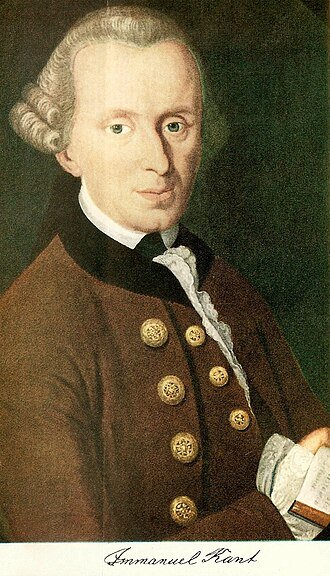
 AuthorImmanuel Kant1724–1804
Published in 1783, the Prolegomena is a short work in which Immanuel Kant presents, in summary form, the essential points of his critical philosophy. Two years earlier he had issued the first edition of the Critique of Pure Reason, a dense book that, in Kant's view, had been poorly received. The Prolegomena was conceived as a simpler and more accessible version of that work, using what Kant calls an analytic method, as opposed to the synthetic method of the Critique. Its title, drawing on the Greek sense of prolegomenon as a preliminary notice or introduction, signals its purpose: to clarify what metaphysics can be once the critique of pure reason has been carried out.
Its starting point is an uncomfortable observation: unlike mathematics or physics, metaphysics has not reached universal and lasting knowledge, and lacks clear criteria for distinguishing truth from error. Kant asks whether it is even possible. To answer, he engages with David Hume's account of the origin of the concept of causality. Hume had held that causal connection arises from the habit of observing certain events following one another; Kant argues instead that the pure concepts of the understanding do not derive from experience but are conditions through which the mind organizes what it perceives.
The work is structured around three questions: how pure mathematics is possible, how pure natural science is possible, and how metaphysics in general is possible. In the first, Kant holds that space and time are pure forms of intuition, conditions of all sensible experience rather than realities independent of the subject; this explains the necessary character of geometrical and arithmetical judgments. In the second, he examines the categories, such as substance and causality, which make an objective necessity possible in natural knowledge. In the third, he shows how reason, when it tries to extend its concepts beyond experience, falls into antinomies concerning the world, the soul, or God, and concludes that such questions admit no theoretical resolution.
The book helped spread critical philosophy and clarify the scope of human knowledge. Today it remains one of the most common entry points into Kant's thought.
Themes
Books to read
- Kant's Prolegomena to Any Future Metaphysics EnglishEPUB 181 KBRead online
Other works by Immanuel Kant
Original Filopedia text based on Wikipedia (es) and Wikipedia (en) and Wikidata.