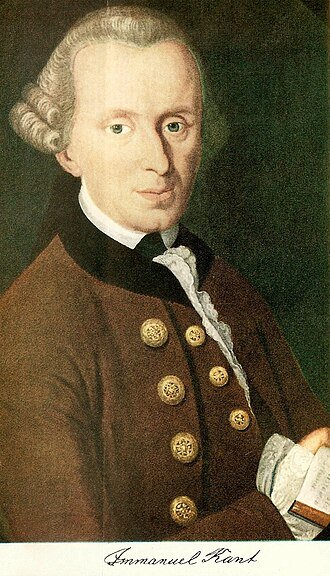
 AuthorImmanuel Kant1724–1804
The Critique of Practical Reason (Kritik der praktischen Vernunft) is the second of Immanuel Kant's three great "Critiques". It was published in 1788, although printing was completed in December 1787. It follows the Critique of Pure Reason of 1781 and is one of Kant's major works in moral philosophy. Kant had already published the Groundwork of the Metaphysics of Morals in 1785, but with this new book he aimed to develop his account of the will as determinable solely by the moral law, to place his ethical views within the broader framework of his critical philosophy, and to expand themes such as the feeling of respect for the moral law and the concept of the highest good.
The book's origin was somewhat unsettled. Kant at one point thought that a critique of practical reason was less necessary than a critique of speculative reason, since in moral matters ordinary human reason can easily reach a high degree of correctness. After several changes of plan, first as an appendix to the second edition of the Critique of Pure Reason and then as an independent work, the text appeared to defend pure practical reason against ethical theories grounded in desire and empirical interest. For this reason it can be read as a critique of the pretensions of empirical practical reason rather than as a critique of pure practical reason itself.
Its structure follows the model of the first Critique: a preface and an introduction, followed by a "Doctrine of the Elements", divided into an Analytic and a Dialectic of pure practical reason, and then a "Doctrine of the Method". In the Analytic, Kant sets out the principles of morality, shows that pure reason can be practical in itself, that is, can motivate action independently of feelings and empirical conditions, and formulates the categorical imperative as the basic law. In the Dialectic he examines the illusion that arises when the highest good is taken as the foundation of morality, and shows how the immortality of the soul and the existence of God function as postulates of practical reason. The Doctrine of the Method addresses how the laws of practical reason can be made accessible to the human mind and how they can influence its maxims.
The work had enormous influence on later philosophy. It opened the way for modern deontological ethics and became a central reference for thinkers such as Johann Gottlieb Fichte, who took it as a starting point for his Doctrine of Science.
Themes
Books to read
- The Critique of Practical Reason EnglishEPUB 209 KBRead online
Other works by Immanuel Kant
Original Filopedia text based on Wikipedia (es) and Wikipedia (en) and Wikidata.