Civilization and Its Discontents
essay on social psychology and cultural theory · 1930
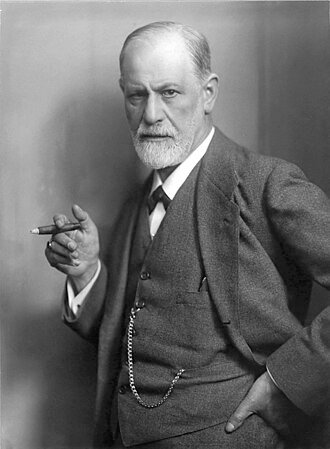 AuthorSigmund Freud1856–1939
Civilization and Its Discontents (in German, Das Unbehagen in der Kultur) is an essay by Sigmund Freud, written in 1929 and published in 1930, at a mature stage of his thinking. Together with Group Psychology and the Analysis of the Ego (1921), it is generally regarded as one of his most significant works in social psychology and one of the most influential critical texts in the social sciences of the twentieth century. Although Freud presents it as a reflection on civilization, its starting point is psychological: he seeks to understand why a society meant to secure well-being produces so much dissatisfaction.
The core of the book is the irreducible antagonism between individual instinctual demands and the restrictions imposed by communal life. Freud argues that civilization moves toward ever larger social units and, to achieve this, must limit the expression and satisfaction of sexual and aggressive drives. Part of the aggressive impulse, once repressed, turns back against the self and takes the form of a sense of guilt. Hence, the more culture develops, the greater the discontent. The idea is not entirely new in Freud's work, but here he elaborates it with far greater clarity, examining the part played by external and internal influences in repression, their reciprocal effects, the hypothesis of the superego, and the nature of guilt.
In the second half, the decisive question is the destructive drive. Freud revises his concept of libido and proposes two distinct instincts: Eros, the life instinct that binds and builds, and Thanatos, the death instinct, an innate tendency toward destruction and a return to the inorganic. He admits that his view of human nature as predisposed to aggression may be hard to accept, yet holds that the suppression of this aggressiveness is the real reason civilization requires its restrictions. Social life thus arises from an enduring struggle between love and hate.
Taken as a whole, the book sets out Freud's view of the world with notable directness: civilization subordinates itself to economic and social necessities that exact a heavy toll on sexuality and aggression in exchange for a limited measure of security. Its interest far exceeds sociology, and it remains an essential reference for thinking about the relationship between the individual, society and suffering.
Themes
Books to read
- Civilization and its discontents EnglishGutenberg
Other works by Sigmund Freud
Original Filopedia text based on Wikipedia (es) and Wikipedia (en) and Wikidata.