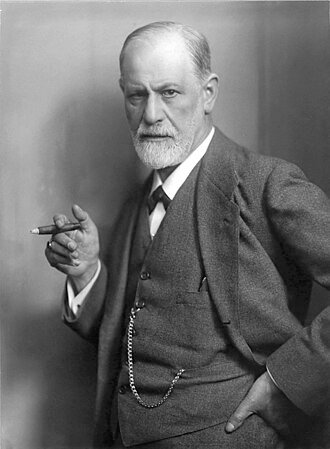
 AuthorSigmund Freud1856–1939
Three Essays on the Theory of Sexuality is a work published by Sigmund Freud in 1905, in which the founder of psychoanalysis develops his conception of sexuality and, in particular, its relation to childhood. Together with The Interpretation of Dreams, it is one of his most far-reaching and original contributions to human knowledge. It grew out of his clinical work with neurotic patients and his theory of the unconscious, which he sought to link with hysteria and with sexuality as the driving instinctual force.
The essays address three main areas. The first, on sexual aberrations, distinguishes between the sexual object and the sexual aim and argues that a disposition to perversions is original and universal in the human sexual instinct, so that neurosis can be seen as, in a sense, the negative of perversion. The second examines infantile sexuality, which Freud identifies in apparently innocent practices such as thumb sucking, autoeroticism and sibling rivalry. The third deals with the transformations of puberty, distinguishing the 'fore-pleasures' of childhood from the 'end-pleasure' of sexual intercourse, and showing how adolescence consolidates sexual identity under the dominance of the genitals.
The text was rewritten and expanded over about two decades, growing by roughly half. The sections on children's sexual theories and on pregenitality appeared in 1915, and concepts such as the castration complex, penis envy and the Oedipus complex were added in later editions. Freud himself acknowledged that the successive layers did not always merge into a wholly consistent whole, which has made the book a text in constant revision and a highly influential work in psychology, medicine and twentieth-century culture.
Themes
Other works by Sigmund Freud
Original Filopedia text based on Wikipedia (es) and Wikipedia (en) and Wikidata.