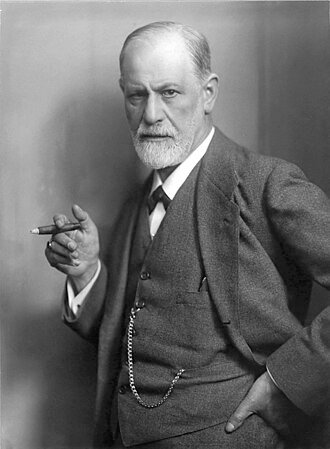
 AuthorSigmund Freud1856–1939
The Ego and the Id (in German, Das Ich und das Es) is a text by Sigmund Freud published in 1923, regarded as his last major theoretical work. In it, Freud presents a revolutionary model of how the psyche functions, known as the "structural model of the psychic apparatus" or "second topography." According to this scheme, mental life is organized around the relations among three distinct agencies: the Id, the Ego and the Super-Ego.
The book begins by revising the classical division between the conscious and the unconscious. Freud argues that this opposition is not enough to explain psychic life, because the Ego itself, which was assumed to be fully conscious, can resist certain contents without knowing it. To account for this, he distinguishes between the preconscious, latent but accessible, and the repressed unconscious, and places the Ego as an instance largely connected with perception and with words. The Ego thus appears as a modified portion of the Id, in contact with the external world, which must mediate between instinctual demands and reality, in an image Freud compares to a rider guiding a horse.
One of the central contributions of the text is the theory of the Super-Ego, which Freud links to the internalization of parental figures and to the Oedipus complex. This agency, heir to moral authority, acts as a critical and repressive conscience, and for this reason the Ego finds itself caught between the pressures of the Id and the demands of the Super-Ego. Freud also stresses the role of the sense of guilt, which often remains unconscious and can become a considerable force in psychic life.
In the final part, Freud examines the two classes of instincts, the life or Eros instincts, aimed at uniting and creating, and the death instincts, aimed at dissolving and destroying, along with the relations between them. Although the reasoning behind these principles has been widely debated, the book had an enormous influence: the structural model became the dominant framework of later psychoanalytic theory, and its concepts remain present in psychology, psychiatry and popular culture.
Themes
Other works by Sigmund Freud
Original Filopedia text based on Wikipedia (es) and Wikipedia (en) and Wikidata.