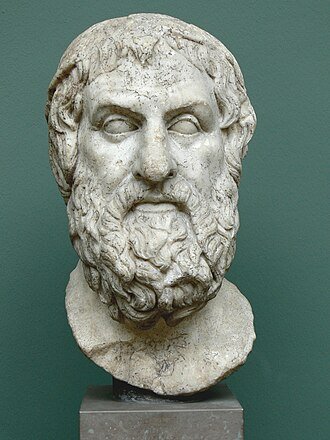
 AuthorSophocles495 BC–405 BC
Oedipus Rex is a tragedy by Sophocles, written in Athens toward the end of the fifth century BC. Its exact date of composition and first performance is unknown; it is usually placed around 429 BC, though that dating is uncertain. At its first staging it won only second place in the dramatic competition, yet over time it came to be regarded as Sophocles' masterpiece and perhaps the finest of all Greek tragedies. Aristotle refers to it several times in his Poetics to illustrate the features of the genre, and today it is counted among the great works of Western literature.
In antiquity it was known simply as Oedipus. The title Oedipus Tyrannus, by which it is commonly known in Greek, was probably adopted to distinguish it from Oedipus at Colonus, another Sophoclean tragedy about the same character. At the time, "tyrant" meant a ruler with no legitimate claim to the throne, and did not necessarily carry a negative judgment. It is one of the three surviving Theban plays by Sophocles. It was the second of them to be written, but in the chronological order of the events they depict it comes first, followed by Oedipus at Colonus and then Antigone.
The play opens when Oedipus is already king of Thebes and husband of Jocasta, having solved the riddle of the Sphinx. Without knowing it, he has fulfilled a prophecy: he has killed his father, Laius, the former king, and married his mother. The city is struck by a plague, and the oracle at Delphi attributes the disaster to the pollution left by Laius's unpunished murder. Oedipus sets out to investigate with determination, convinced he will bring justice, and a truth he himself ignores is revealed step by step. The drama is one of discovery: each testimony brings the protagonist closer to a certainty that will destroy him. When Jocasta grasps the truth, she takes her own life; Oedipus, horrified by his parricide and incest, blinds himself and asks Creon to let him go into exile.
The tragedy turns on the tension between human will and the destiny foretold by the gods, and on the difficulty of knowing oneself. Oedipus is an intelligent and honest man who seeks the truth with the best intentions, and it is precisely for that reason that he falls. For centuries his downfall has been read as a meditation on the limits of human knowledge and on moral responsibility even for acts committed in ignorance.
Themes
Books to read
- Edipo rey; Edipo en Colona; Antígona SpanishGutenberg
Other works by Sophocles
Original Filopedia text based on Wikipedia (es) and Wikipedia (en) and Wikidata.