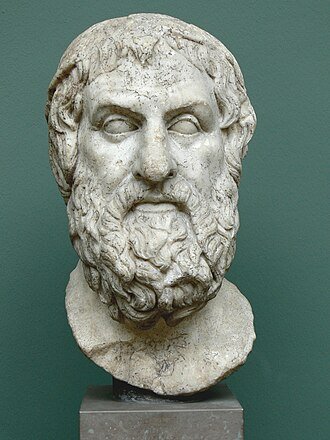
 AuthorSophocles495 BC–405 BC
Philoctetes is one of the seven surviving tragedies of Sophocles. It was first performed at the City Dionysia in Athens in 409 BC, where it won first prize. It was written during the final years of the Peloponnesian War, and its action is set in the last year of the Trojan War, after the events narrated in the Iliad.
The story takes place on the island of Lemnos. According to myth, Philoctetes had received the bow of Heracles in exchange for lighting the hero's funeral pyre, but he had been abandoned there by the Greeks after a snakebite that caused unbearable pain and a foul smell. Nine years later, a Trojan seer reveals that the war can only be won with the bow and its owner. Odysseus and Neoptolemus, son of Achilles, set out to recover it.
The heart of the play is the moral dilemma of Neoptolemus, an honest young man whom Odysseus asks to deceive Philoctetes by winning his trust with a false story. The tension between collective advantage and personal integrity runs through the whole work, which ends with the intervention of Heracles, now a god, who orders Philoctetes to go to Troy. The play has been highly influential in the theatre and in later reflection on ethics and power.
Themes
Other works by Sophocles
Original Filopedia text based on Wikipedia (es) and Wikipedia (en) and Wikidata.