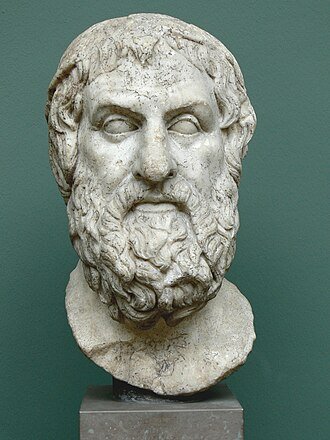
 AuthorSophocles495 BC–405 BC
The Ichneutae (Ichneutai), also known as The Searchers or The Trackers, is a satyr play by the Athenian dramatist Sophocles, written in the fifth century BC. For centuries it was known only through a few brief quotations in ancient authors. This changed when extensive remains of a second-century CE papyrus roll containing the text were published among the Oxyrhynchus Papyri in the early twentieth century. With more than four hundred lines preserved in whole or in part, it is now the best-preserved ancient satyr play after Euripides' Cyclops, the only complete surviving example of the genre. The manuscript is kept in the British Library in London.
The plot derives from the myth told in the Homeric Hymn to Hermes. A newborn Hermes has stolen Apollo's cattle, and the elder god sends a chorus of satyrs to recover them, promising them freedom and gold if they succeed. The satyrs follow the cattle's tracks to a cave, where they hear the lyre that the infant has just invented. Frightened by the strange sound, they debate what to do, and the mountain nymph Cyllene explains the nature of the instrument. Outside the cave they find sewn cowhides and become convinced they have caught the thief. The papyrus breaks off as Apollo arrives.
The work mixes the burlesque humour typical of the satyr genre with a light, playful tone, and offers valuable evidence of how Athenian theatre approached myths and gods.
Themes
Other works by Sophocles
Original Filopedia text based on Wikipedia (es) and Wikipedia (en) and Wikidata.