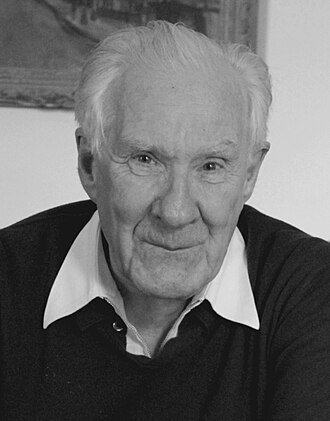
Alain Badiou
b. 1937 · French philosopher, novelist and playwright
Alain Badiou (born in Rabat in 1937) is a French philosopher who has also written novels and plays. Rooted in the French academic tradition, he has built one of the most distinctive bodies of work in contemporary thought. Together with Jacques Rancière, he is widely regarded as one of the leading philosophers in France today.
The son of a member of the French Resistance, Badiou studied at the École Normale Supérieure in Paris, where he came under the influence of Louis Althusser's structural Marxism and of Jacques Lacan's psychoanalysis. After a thesis on Spinoza's Ethics, he taught at a lycée and published his first novels. In 1969 he joined the newly founded University of Paris VIII at Vincennes, where he argued fiercely with Gilles Deleuze and Jean-François Lyotard. He was an early political militant, helping to found the Unified Socialist Party, and after May 1968 he moved toward Maoism, a position he later reassessed with some distance. In 1999 he took charge of the philosophy department at the ENS.
His central project, Being and Event (1988), argues that mathematics, and set theory in particular, is the true ontology, the science of being as being. Against the linguistic relativism he sees as typical of postwar French thought, Badiou defends universal truths. These truths are not self-evident: they emerge when an event breaks into a situation and reveals what had been hidden. Whoever remains faithful to that event becomes a subject, so for Badiou subjectivity is not a natural human trait. Philosophy, he holds, should not be absorbed by any one of the four truth procedures (art, love, politics and science), but should think how they can coexist.
Other major works include Theory of the Subject (1982), Manifesto for Philosophy (1989), Ethics (1993), Handbook of Inaesthetics (1998) and Logics of Worlds (2006), the second volume of his Being and Event project. His influence reaches aesthetics, political philosophy and the theory of the subject, and since the turn of the century much of his work has been translated into English and Spanish, extending his presence in international debate.
Key ideas
- Mathematical ontology: being is thought through set theory, which for Badiou is the true science of what is insofar as it is.
- Event: an unforeseen rupture that makes visible within a situation a truth that had been hidden.
- Subject by fidelity: a human being becomes a subject by remaining faithful to an event, not through a natural condition.
- Truth procedures: art, love, politics and science produce truths, and philosophy must think their compossibility without suturing itself to any one of them.
- Universalism: against relativism, Badiou defends invariant truths that hold for everyone and at all times.
Curiosities
A theatre of ideas
Alongside his novels, Badiou has written plays, such as Ahmed le Subtil, and has enjoyed success as a dramatist.
Debates at Vincennes
At the University of Paris VIII he held fierce intellectual debates with Deleuze and Lyotard, whose works he regarded as unhealthy deviations from Althusser's program.
Teachers and influences
Influenced by
- Karl Marx 1818–1883
- Plato 428 BC–348 BC
- Mao Zedong 1893–1976
- Jean-Paul Sartre 1905–1980
- Georg Wilhelm Friedrich Hegel 1770–1831
- Samuel Beckett 1906–1989
- Stéphane Mallarmé 1842–1898
- Gilles Deleuze 1925–1995
- Jacques Lacan 1901–1981
- Louis Althusser 1918–1990
Influenced
- Slavoj Žižek b. 1949
- Quentin Meillassoux b. 1967
- Simon Critchley b. 1960
- Ray Brassier b. 1965
Original Filopedia text based on Wikipedia (es) and Wikipedia (en) and Wikidata.