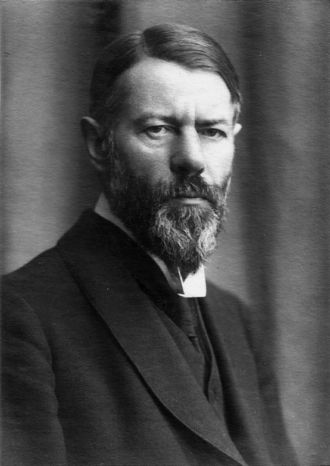
 AuthorMax Weber1864–1920
General Economic History (Wirtschaftsgeschichte) is a work by Max Weber assembled from notes of his lectures, which his students gathered and completed with the help of his published and unpublished writings. The lectures on which it is based were given between 1919 and 1920, when Weber taught economic and social history. The book appeared in 1923, three years after his death, and Frank H. Knight translated it into English in 1927.
Weber regarded economics as a field that should cover not only economic theory but also economic sociology and economic history. In his view, economic history faces three main challenges: the division of labor, the economic orientation toward profit or toward the maintenance of the household, and the degree to which rationality and irrationality shape economic life. For this reason, some scholars regard the work as very close to economic sociology.
Its most notable argument is an institutional theory of the rise of capitalism in the West. Unlike The Protestant Ethic and the Spirit of Capitalism, religion here plays a minor part. The emphasis falls on the role of the state and of calculable law, which allow economic actors to predict exchange and seek gain. Weber also challenged thinkers such as Werner Sombart, who held that Jews were responsible for Western capitalism, arguing that so-called Jewish capitalism should be understood as pariah capitalism rather than rational capitalism.
Its influence has been uneven. Today it is read mainly by sociologists and social philosophers. In the early 1980s, Randall Collins, Daniel Chirot and Douglass C. North revived its institutional theory as an alternative to explanations inspired by Immanuel Wallerstein. Among its readers was Frank Knight, one of the founders of the neoclassical Chicago school of economics, who translated it.
Themes
Other works by Max Weber
Original Filopedia text based on Wikipedia (es) and Wikipedia (en) and Wikidata.