The Economic Ethics of the World Religions
unfinished series of sociological studies
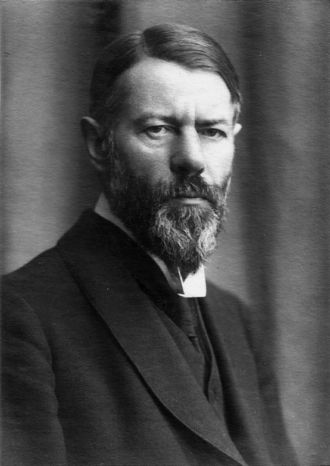 AuthorMax Weber1864–1920
The Economic Ethics of the World Religions is an unfinished book series by Max Weber, in which the author extended to other religious traditions the work in the sociology of religion he had begun with The Protestant Ethic and the Spirit of Capitalism. The series comprises The Religion of China, The Religion of India, and Ancient Judaism. Weber's sudden death in 1920 left the work incomplete: he did not go on to study early Christianity and Islam, which were to follow Ancient Judaism.
The three main themes of the books are the influence of religious ideas on economic activity, the relationship between social stratification and religious ideas, and the distinctive characteristics of Western civilisation. Weber aimed to explain why the cultures of the Western and Eastern worlds followed different paths of development, without making value judgments, unlike the social Darwinists of his time. He also proposed a socio-evolutionary model of religious change, in which societies moved from magic to ethical monotheism through polytheism, pantheism and monotheism, as growing economic stability favoured the professionalisation of an increasingly sophisticated priesthood.
Themes
Other works by Max Weber
Original Filopedia text based on Wikipedia (en) and Wikidata.