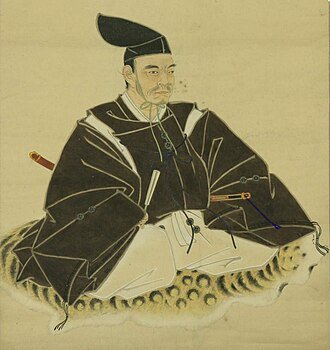
 AuthorArai Hakuseki1657–1725
Oritaku Shiba no Ki is an autobiographical text written by Arai Hakuseki (1657–1725), a scholar and official of the Edo period in Japan. In it he describes his ancestors, his childhood and his work as an official of the Tokugawa government, offering a valuable view of the Tokugawa administration of his day. The date of publication of the work is unknown.
Hakuseki does not explain the meaning or importance of his title. The most widely held view links it to a poem in the Shin Kokin Wakashū anthology, attributed to Emperor Go-Toba, in which the smoke of burning heather twigs recalls someone who is no longer there. For Hakuseki, the person he longed for and could not forget was Tokugawa Ienobu, the sixth shōgun of the Tokugawa shogunate. Katsuta Katsutoshi offers an alternative explanation: in a letter to Mura Kyūsō, Hakuseki recalls that his father and he would burn brushwood and talk about past and present through the night, so that "burning brushwood" would be a euphemism for reminiscing conversation. Katsuta also notes that Hakuseki had no particular talent for waka, which makes it less likely that the title derives from that poem.
The work was translated into English by Joyce Ackroyd and published in 1979 by Princeton University Press under the title Told Round a Brushwood Fire.
Themes
Other works by Arai Hakuseki
Original Filopedia text based on Wikipedia (en) and Wikidata.