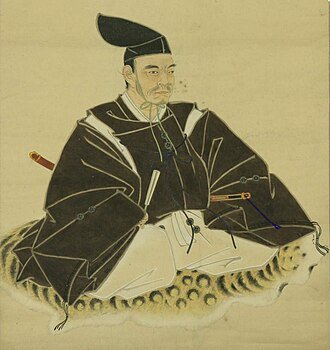
Arai Hakuseki
1657–1725 · Confucian scholar, politician and writer of the Edo period
Arai Hakuseki (1657-1725) was a Confucian scholar, politician and writer in Edo-period Japan, who advised the shōgun Tokugawa Ienobu. He belonged to the Confucian tradition and worked across history and the study of the Western world. He matters because he combined scholarly reflection with a hands-on role in government, which was unusual among the learned men of his time.
Born in Edo, he showed remarkable precocity from an early age; according to one story, at the age of three he copied a Confucian book character by character. After leaving the service of his lord, the daimyo Hotta Masatoshi, he became a rōnin and studied under the Confucian scholar Kinoshita Jun'an. In 1693 he was called to advise the shogunate alongside Manabe Akifusa. With Ienobu's backing and that of the senior official Abe Seikyō, he launched the Shōtoku reforms, a set of economic policies. They included minting a better currency, which helped bring inflation under control, and a new trade regulation meant to stop the outflow of gold and silver to China and the Dutch. Trade would instead use goods such as silk, porcelain and dried seafood. Its effects were limited, since precious-metal trade through Tsushima and Satsuma remained beyond the bakufu's control.
His political thought held that, since no revolution had altered Japan's basic institutions, the shōgun should be subordinate to the emperor, and that good government and personal virtue confirmed a ruler's legitimacy. After Ienobu's death he withdrew from office and devoted himself to writing: historical works such as Tokushi Yoron and Koshitsū, a study of the West drawn from his conversations with the Jesuit Giovanni Battista Sidotti, known as Seiyō Kibun, and the diary Oritaku Shiba no Ki. His influence can be seen in Japanese historiography and in growing interest in Western knowledge, which would gain weight in the eighteenth century. He died in 1725 and was buried in Asakusa; his remains were later moved to Nakano.
Key ideas
- Confucianism applied to government: the learning of the texts had to become good administration and virtue in the exercise of power.
- Monetary and trade reform: minting better coinage and controlling foreign trade aimed to protect the country's resources.
- Imperial legitimacy: the shōgun should be subordinate to the emperor, whose authority rested on tradition and the moral conduct of the ruler.
- Knowledge of the West: studying Western customs and learning could deepen understanding of the world without disrupting the Japanese order.
Where to start
Arai Hakuseki's autobiography Oritaku Shiba no Ki is the most accessible entry point to his work. It recounts his ancestry, childhood and career as an official of the Tokugawa government, offering a direct view of Edo-period political and social life through the eyes of a man who lived it from within.
Next: Tokushi Yoron. The Tokushi Yoron broadens the view to Japan's past and shows how Arai interpreted history to understand the present political order.
Works in Filopedia
Curiosities
A precocious child
According to tradition, at the age of three he copied a book by Confucius character by character.
Hi no Ko, child of fire
He was born in the year of the Great Meireki Fire, and because of his fiery temper and a furrowed brow that resembled the character 火, he was affectionately called Hi no Ko.
A dialogue with a missionary
His conversations with the Jesuit Giovanni Battista Sidotti gave rise to his study of the West, Seiyō Kibun.
Original Filopedia text based on Wikipedia (es) and Wikipedia (en) and Wikidata.