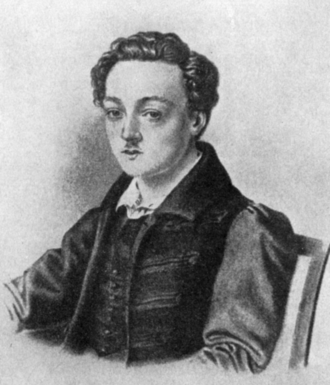
 AuthorGeorg Büchner1813–1837
Danton's Death (Dantons Tod, in German) is Georg Büchner's first play, set during the French Revolution. Büchner wrote it in about five weeks, from mid-January to mid-February 1835, after researching it from late 1834. He lived in constant fear of arrest because of his political views, and the play reached print only that same year, heavily cut and with its politics softened by sexual innuendo. It was the only one of his plays published during his lifetime, though in a much censored form. For a long time no theatre dared to stage it; its premiere did not take place until 1902, in Berlin, long after Büchner's death.
The play covers the lull between the first and second Terror. Georges Danton, one of the leaders of the Revolution, had helped create the Revolutionary Tribunal, an instrument that allowed people to be condemned to death without trial, proof or witnesses. He soon realised the mistake and fought to end it, but Robespierre used the Tribunal to eliminate Danton and all opposition, and ended up sending Danton to the guillotine as well. The work alternates scenes of political debate, philosophical conversations in prison about the existence of God and the meaning of life, and the trial, in which the public sympathises with the accused until the court changes course. Danton appears as a hedonistic, lucid and weary man, aware of his guilt over the September Massacres of 1792.
Its most notable feature is its use of numerous historical sources and long quotations from original political speeches, which led the twentieth century to regard it as a precursor of documentary theatre. Büchner presents the crowd as a shifting chorus and the leaders as figures driven by power and fear, without reducing history to heroes and villains.
Themes
Other works by Georg Büchner
- The Hessian Courier 1834
- Leonce and Lena 1836
- Lenz 1839
- Woyzeck 1875
Original Filopedia text based on Wikipedia (en) and Wikidata.