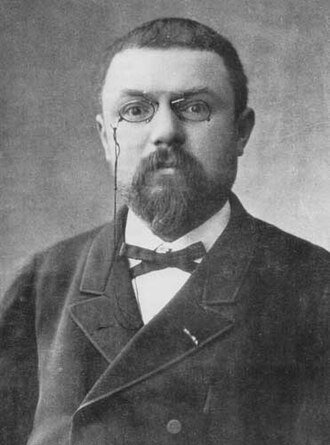
 AuthorHenri Poincaré1854–1912
The Value of Science (La valeur de la science) is a book by the French mathematician, physicist and philosopher Henri Poincaré, published in 1905 (the reference text gives 1904). It is presented as a continuation of his previous work, Science and Hypothesis (1902), and expands the questions in the philosophy of science that the earlier book had raised. Poincaré wrote at a time when physics and mathematics were undergoing profound transformations, and his pages reflect a concern for the foundations of scientific knowledge.
The first part of the book deals with the mathematical sciences and, in particular, with the relationship between intuition and logic. Poincaré argues that what we call intuition changes over time: what one era regarded as logical reasoning may later be seen as intuition. The evolution of mathematical thought, from the arithmetization of analysis to the revival of intuitive ideas within axiomatic systems, shows that mathematical intuition is not a fixed gift but the result of a principle of least effort tied to scientific convention. To illustrate this, he takes the example of three-dimensional space: its representation is only one possibility, chosen for its usefulness among many models the mind could build. For Poincaré, intuition has two main roles: to help choose the path in the search for scientific truth, and to make logical developments comprehensible. He sees this relationship as inseparable from scientific progress, which he conceives as an enlargement of the framework of science in which new theories incorporate earlier ones.
The second part studies the links between physics and mathematics, with an approach that is both historical and technical. Poincaré, who was rarely an experimenter, defends experimentation as a pillar of the scientific method, but holds that mathematics should not absorb physics; it should develop as a tool in its own right. Mathematics is, in his words, the language in which physicists can understand one another. The main aim of mathematical physics is less discovery than reformulation and synthesis, ensuring the coherence of the theories current at a given time.
The book gives special attention to the crisis of the principles of physics at the beginning of the twentieth century. Poincaré examines principles such as the conservation of energy, the principle of entropy, Newton's third law, the conservation of mass and the principle of relativity, and shows how discoveries about radium, Brownian motion and the electrodynamics of moving bodies called them into question. Far from regarding them as absolute truths, he understood them as scientific conventions that unify a large number of laws; if they no longer account for experience, they lose their usefulness and must be replaced. Poincaré kept a relatively optimistic confidence that mathematical physics could reconstruct these principles or find others that would restore the lost unity.
The work was well received in the scientific and philosophical circles of its time and contributed to debates on conventionalism and the role of intuition in science, influencing later philosophy of science.
Themes
Other works by Henri Poincaré
Original Filopedia text based on Wikipedia (en) and Wikidata.