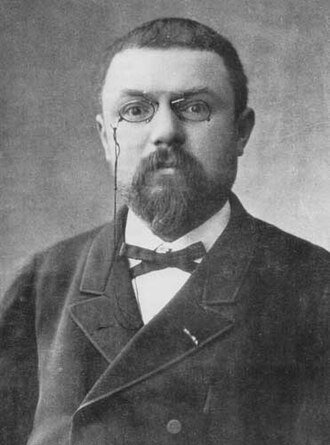
 AuthorHenri Poincaré1854–1912
Science and Hypothesis is a book by the French mathematician Henri Poincaré, first published in 1902 and aimed at a non-specialist readership. It covers mathematics, space, physics and nature, approached through reflection on the scientific method.
Its central thesis holds that absolute truth in science is unattainable. Many commonly held beliefs of scientists, according to Poincaré, are maintained as convenient conventions rather than because they are more valid than the alternatives available, although they are acceptable insofar as they prove more useful than other options.
In the book, Poincaré describes scientific questions that were still open in his time: the photoelectric effect, Brownian motion, and the relativity of physical laws in space. Reading it inspired Albert Einstein to write the papers he published in 1905, a year history remembers as Einstein's Annus Mirabilis. It was translated into Spanish in 1907, and a new English translation appeared in 2017.
Themes
Books to read
- Science and hypothesis EnglishGutenberg
Other works by Henri Poincaré
- The Value of Science 1905
Original Filopedia text based on Wikipedia (es) and Wikipedia (en) and Wikidata.