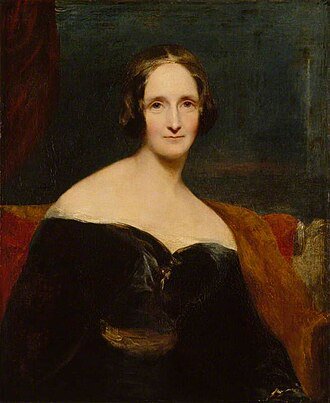
 AuthorMary Shelley1797–1851
The Last Man is a novel by Mary Shelley, first published in 1826, and regarded as one of the earliest works of dystopian fiction in English. Its action is set in the late twenty-first century, when a bubonic plague sweeps across the world and reduces humanity almost to extinction. Shelley presents the story as a manuscript supposedly discovered in a cave near Naples, its prophecies written on leaves by the Cumaean Sibyl, a device that allows her to narrate the future as though it were an ancient document.
The novel follows Lionel Verney, the orphaned son of an impoverished nobleman, who becomes civilised through his friendship with Adrian, the son of the last King of England, a young man of republican convictions and philosophical temperament. Through them and their circle, the book explores the politics of the British republic, ambition, love and power. Several characters draw on real people from Shelley's own circle: Adrian recalls her husband, Percy Bysshe Shelley, and the ambitious, passionate Lord Raymond recalls Lord Byron, while Verney is largely an autobiographical figure.
The novel was harshly criticised on publication and fell into near obscurity for more than a century. It was only in the 1960s that scholars rediscovered it and established it among the foundational texts of apocalyptic and dystopian fiction. It is read today both for its literary merit and for its meditation on the fragility of societies and on human responsibility in the face of catastrophe.
Themes
Books to read
- The Last Man EnglishEPUB 515 KBRead online
Other works by Mary Shelley
Original Filopedia text based on Wikipedia (es) and Wikipedia (en) and Wikidata.