Collapse: How Societies Choose to Fail or Succeed
popular history and environmental history essay · 2005
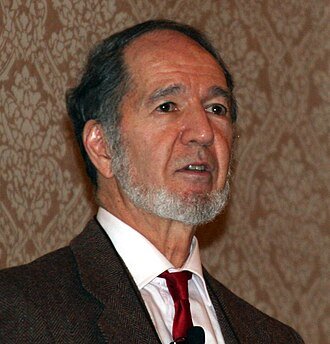 AuthorJared Diamondb. 1937
Collapse, published in 2005 by the geographer and popular science writer Jared Diamond, a professor at the University of California, Los Angeles, opens by defining collapse as a drastic decrease in human population size and/or political, economic or social complexity over a considerable area and for an extended period. From that starting point the author reviews historical and prehistoric cases of collapse, especially those in which environmental change played a decisive role.
Diamond identifies five factors that can contribute to collapse: environmental damage, climate change, hostile neighbours, the loss of trading partners, and the society's own response to its problems. In his view, the root problem in nearly all of them is population pressure relative to the practical, rather than theoretical, carrying capacity of the environment. The cases he examines include Easter Island, the Anasazi of the American Southwest, the Maya, the Norse settlers of Greenland and the small island of Pitcairn. He also looks at societies that managed to endure, such as Tikopia, the agricultural success of central New Guinea, and the forest management of Tokugawa Japan.
The second half of the book turns these lessons toward the present. Diamond lists twelve environmental problems facing humanity today. Eight of them have contributed to past collapses, among them deforestation, soil erosion, overfishing and overhunting. Four are new: human-caused climate change, the buildup of toxins, energy shortages, and the use of nearly all of the planet's photosynthetic capacity. He devotes chapters to contemporary cases including Rwanda, Haiti and the Dominican Republic, China and Australia. He concludes that two choices separated societies that survived from those that failed: long-term planning, which often conflicts with the short-term interests of elites, and a willingness to reconsider core values when circumstances change.
The book was widely read and praised; Tim Flannery called it outstanding in Science, and The Economist, though broadly favourable, faulted it for excessive pessimism and some erroneous statistics. It was shortlisted for the 2006 Aventis Prize. It has also drawn substantial scholarly criticism. Some archaeologists contend that the fate of Easter Island owed more to disease and nineteenth-century slave raiding than to environmental decline alone, and the collective volume Questioning Collapse (2010) gathers objections from specialists to this and his other books.
Themes
Other works by Jared Diamond
Original Filopedia text based on Wikipedia (es) and Wikipedia (en) and Wikidata.