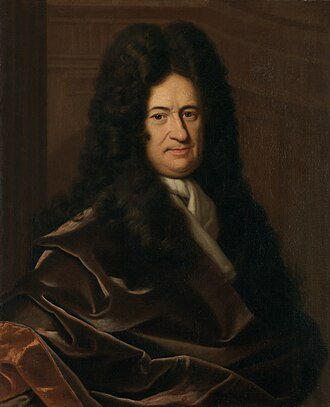
 AuthorGottfried Wilhelm Leibniz1646–1716
Théodicée, whose full title is Essays of Theodicy on the Goodness of God, the Freedom of Man and the Origin of Evil, is a work by Gottfried Leibniz published in 1710. It was the only book Leibniz saw printed during his lifetime; his other major work, New Essays on Human Understanding, appeared posthumously in 1765. The book gave its name to a discipline: the word «theodicy», meaning the justification of God in the face of evil, was coined here by Leibniz himself.
The work grew largely out of a response to Pierre Bayle, whose Historical and Critical Dictionary (1697) held that no defensible rational solution explained why God permits evil. Bayle believed reason could raise powerful arguments against the goodness, justice and freedom of God as orthodox Christianity taught them. Leibniz answers him point by point. He maintains that one can prove God to be an infinitely perfect being and that, therefore, He must have created the world with the greatest possible balance of good over evil: «the best of all possible worlds».
Leibniz distinguishes three kinds of evil: moral, which is sin; physical, which is pain; and metaphysical, which is the limitation inherent in every creature. God permits the first two for the sake of greater goods, and the third is unavoidable, since nothing created can equal absolute perfection. Against the objection that predestination cancels freedom, he argues that human acts are foreseen but not necessary in the logical sense. And against the idea that God, unable to choose anything but the best, lacks freedom, he replies that this moral necessity is compatible with it.
The book had wide impact. Its optimism became the target of Voltaire, who satirized it in Candide.
Themes
Books to read
- Theodicy Essays on the Goodness of God, the Freedom of Man and the Origin of Evil EnglishGutenberg
Other works by Gottfried Wilhelm Leibniz
Original Filopedia text based on Wikipedia (es) and Wikipedia (en) and Wikidata.