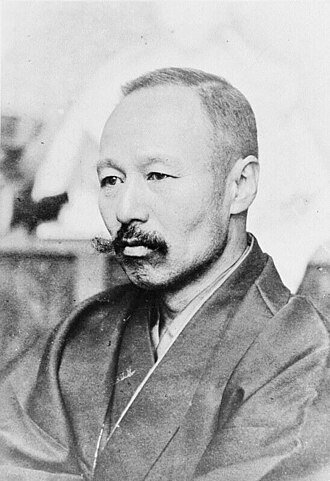
 AuthorMori Ōgai1862–1922
Takasebune is a short story by the Japanese writer and illustrator Mori Ōgai, who is considered, together with Natsume Sōseki, one of the most important figures in modern Japanese literature. It is one of the author's best-known works. Set in the Edo period, its plot concerns a boat that carried criminals from Kyoto to Osaka along the Takase River.
On one of these journeys, the police escort in charge of guarding the prisoners is surprised to find that only one prisoner is travelling, Kisuke, an unnervingly polite man who does not fit the stereotypical image of a criminal. Curious, the escort asks why he seems so cheerful. Kisuke replies that his previous life was so miserable that exile looks like an improvement, and that the money the government gives him to start over is the largest sum he has ever had, which leaves him content. When the escort asks about his crime, Kisuke recounts how he and his younger brother were orphaned, how he came to carry the work of both when the brother fell ill and fell into heavy debt, and how one day he found his brother had attempted suicide and begged him to end his suffering.
Themes
Other works by Mori Ōgai
Original Filopedia text based on Wikipedia (en) and Wikidata.