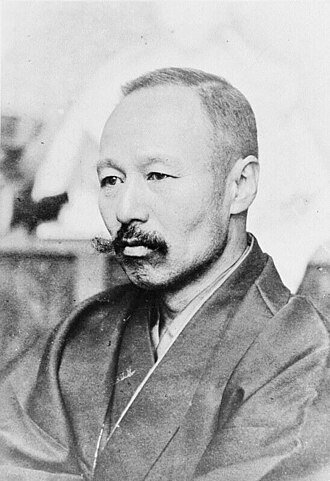
 AuthorMori Ōgai1862–1922
The Dancing Girl is the first short story published by the Japanese writer Mori Ōgai. It appeared in the magazine Kokumin no Tomo in 1890 and draws on the author's own years as a medical student in Germany between 1884 and 1888, although scholars note that Ōgai also based it on other students he knew there, so it should not be read as a strictly autobiographical account. It was written during Japan's Meiji era, a period of profound transformation, and it is often read as a reflection of that society's values and conflicts: the tension between modernity and tradition, East and West, and individual desire versus social rules.
The story recounts the doomed romance between Ōta Toyotarō, a gifted Japanese exchange student, and Elise, a young German dancer from a poor family. Ōta arrives in Berlin feeling isolated and, one night, finds Elise weeping; drawn to her, he begins to help and tutor her. His affection gradually deepens into love, yet friends and superiors urge him toward a promising career they regard as incompatible with the relationship. Ōta, who recognises himself as weak-willed and inclined to yield rather than act on his own initiative, ultimately chooses his career, leaving Elise in a nervous breakdown and pregnant.
The narrative is notable for its first-person voice, a common trait of modern literature at the end of the nineteenth century, and for its passive protagonist. It was adapted as an episode of the anime series Animated Classics of Japanese Literature and, in 2006, as an OVA by Toei Animation. Its story anticipates, with the roles reversed, Puccini's opera Madama Butterfly. It also sparked a lively critical debate between Ōgai and the writer Ishibashi Ningetsu, which contributed to the growth of Japanese literary criticism.
Themes
Other works by Mori Ōgai
- Vita Sexualis 1909
- Takasebune 1916
- The Wild Geese 1959
Original Filopedia text based on Wikipedia (en) and Wikidata.