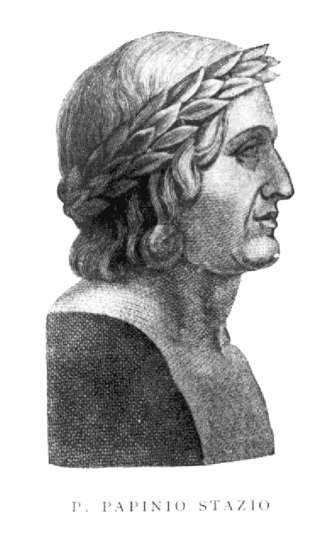
 AuthorPublius Papinius Statius45–96
The Silvae is a collection of Latin poems by Publius Papinius Statius (c. 45 – c. 96 CE), written in hexameters, hendecasyllables and other lyric meters. It contains thirty-two poems divided into five books, each preceded by a prose preface that introduces and dedicates it to a patron or friend. The subjects are highly varied: equestrian statues, villas, baths, banquets, consolations for the deaths of friends and dependants, birthdays, weddings and farewells. Through them, historians gain a vivid picture of social life in Domitian's Rome and of Statius' own circle.
The dating of the work rests on comparing the careers of the addressees of each poem and on references made by other authors, such as Martial. Statius probably composed the poems between about 89 and 96 CE. The first three books seem to have been published together after 93, a year after the Thebaid; the fourth appeared around 95, and the fifth is thought to have been released posthumously around 96.
The title has been much discussed by scholars. It is assumed to derive from a lost collection by Lucan, and in Latin silvae can mean both 'forest' and 'raw material'. The word designated a poet's draft, improvised in a moment of strong inspiration and later revised into a polished metrical poem. In the preface to Book 1, Statius describes how these pieces streamed from his pen in the heat of the moment, a kind of pleasurable haste, and he claims that none took him more than two days to compose.
Several models lie behind the work. Catullus is an important inspiration, especially in his use of the hendecasyllable and the variety of subjects, though Statius avoids Catullus' invective tone. Horace shapes his lyric pieces and epistles, Ovid influences his narrative manner, and Virgil is present throughout through allusions and exempla. From the Greek tradition, Pindar shapes the panegyric character of many poems.
For centuries the Silvae were little read. The manuscript was rediscovered around 1417 by Poggio Bracciolini in the library of Reichenau Abbey, together with Silius Italicus' Punica. Since then the collection has become a valuable source for the study of occasional poetry and of imperial Roman society.
Themes
Other works by Publius Papinius Statius
Original Filopedia text based on Wikipedia (en) and Wikidata.