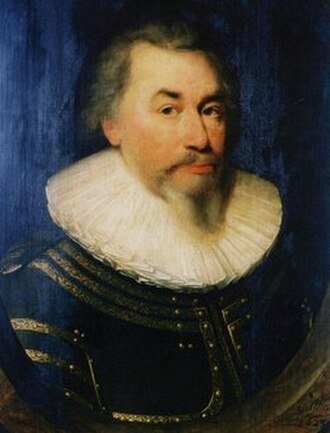
 AuthorRobert Filmer1588–1653
Patriarcha, or The Natural Power of Kings is a political treatise by the English philosopher Robert Filmer (1588–1653). The author probably began it in the 1620s and had completed it before the outbreak of the English Civil War in 1642, but it was not published until 1680, after the Restoration of the monarchy and almost thirty years after Filmer's death.
The book defends the divine right of kings. For Filmer, the authority of modern states derives from the biblical patriarchs, whom he regards as the heirs of Adam, and history and reason supposedly confirm that continuity. His argument describes an arrangement of patriarchy at every level of human society, which he considers natural. The state resembles a family in which the king takes the place of the father and the subjects that of children, so that obedience is not a choice but a natural duty.
Filmer also criticized rival theories that placed the foundation of power in the consent of the governed or in the social contract. The work provoked strong controversy: John Locke and others attacked what they saw as the absurdity of its claims. The first of Locke's Two Treatises of Government is largely a critique of Filmer, whose account of political authority Locke judged unworkable, since it is impossible to show that any particular ruler descends from Adam. Even so, Patriarcha remains Filmer's best-known work, and some scholars, such as R. S. Downie, find his objections to contract and consent as explanations of political obligation plausible, regretting that his belief in Adam's kingship has overshadowed them.
Themes
Original Filopedia text based on Wikipedia (es) and Wikipedia (en) and Wikidata.