Parerga and Paralipomena
collection of philosophical essays and aphorisms · 1851
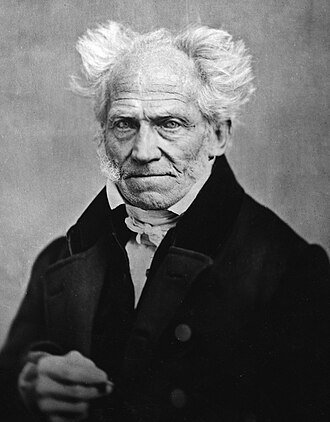 AuthorArthur Schopenhauer1788–1860
Parerga and Paralipomena is the last major work published by the German philosopher Arthur Schopenhauer, appearing in two volumes in late 1851. The title, drawn from Greek, describes its contents: the parerga (supplementary or accessory works) and the paralipomena (supplements or appendices). Schopenhauer conceived it as a more popular vehicle for his thought, written in a lighter style than his systematic treatises. It was addressed chiefly to readers already familiar with his philosophy, though he believed newcomers could also follow it.
The book came after decades of editorial and academic failure. Schopenhauer's earlier main work, The World as Will and Representation, had passed almost unnoticed, and publishers were reluctant to take on this new project. It was Julius Frauenstädt, his disciple, who persuaded a Berlin bookseller to bring it out. Its success was unexpected: it drew wide attention and made Schopenhauer the fashionable philosopher of Germany, granting him a fame that had long eluded him.
The first volume gathers six independent essays: a sketch of the history of the doctrine of the ideal and the real, fragments for the history of philosophy, a critique of academic philosophy, a reflection on the apparent purposefulness in individual fate, an essay on spirit-seeing and related phenomena, and the much-read Aphorisms on the Wisdom of Life, probably the most popular part of the collection. The second volume groups, in thirty-two thematic chapters, thoughts on logic, nature, aesthetics, religion, suicide, women, education, reading and style, among other subjects.
Its later influence was considerable. Its aphoristic passages and psychological remarks shaped the philosopher and psychologist Paul Rée, and through him Friedrich Nietzsche, who took up the aphorism as a mode of thinking. After Schopenhauer's death in 1860, Frauenstädt prepared an expanded second edition using material from his literary estate.
Themes
Other works by Arthur Schopenhauer
Original Filopedia text based on Wikipedia (es) and Wikipedia (en) and Wikidata.