Fads and Fallacies in the Name of Science
popular survey of pseudosciences · 1957
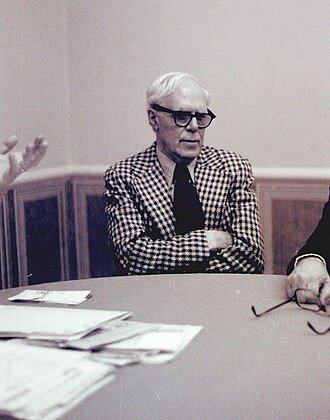 AuthorMartin Gardner1914–2010
Fads and Fallacies in the Name of Science is Martin Gardner's second book. It was first published in 1952 by G. P. Putnam's Sons as In the Name of Science, and the 1957 Dover edition is a revised and expanded version. Its subtitle announces the theme: an examination of "the curious theories of modern pseudoscientists and the strange, amusing and alarming cults that surround them," presented as a study in human gullibility. The book grew out of an article published in the Antioch Review in 1950, which Gardner developed into a full volume.
The work opens with a reflection on how the ideas of cranks and pseudo-scientists spread, criticising both the credulity of the popular press and the irresponsibility of some publishers. Gardner admits that history contains rejected ideas that later proved right, yet argues that in his own time scientific journals erred more often on the side of printing questionable theses. He also holds that a degree of scientific orthodoxy is necessary, since otherwise science would be overwhelmed by every new notion. For him, the decisive trait of the crank is near-total isolation from the scientific community, with its channels of communication and its cooperative procedures for testing theories. Einstein's relativity, despite initial resistance, was evaluated through those channels; the pseudo-scientist remains outside them.
Gardner identifies a second trait, a tendency toward paranoia, visible in claims of personal genius, contempt for other researchers, the belief in a conspiracy against the author's ideas, and the use of invented, jargon-heavy language. Against this background, the chapters survey a wide range of fads: flat and hollow earths, Velikovsky's cosmic catastrophes, Hörbiger's glacial cosmogony, flying saucers, the supposed secrets of the Great Pyramid, homeopathy, chiropractic, fad diets, graphology, phrenology, unorthodox psychology, extrasensory perception and past-life regression. Some chapters also address racial theories and Lysenko's biology, showing how pseudoscientific ideas could serve hatred or political power.
The book became a foundational text of the modern skeptical movement and a standard reference for later studies of pseudoscience. Michael Shermer regarded it as an early landmark of science-based skepticism, and it has been reprinted at least thirty times.
Themes
Other works by Martin Gardner
Original Filopedia text based on Wikipedia (en) and Wikidata.