Operating Manual for Spaceship Earth
popular essay on systems, technology and the future of humanity · 1968
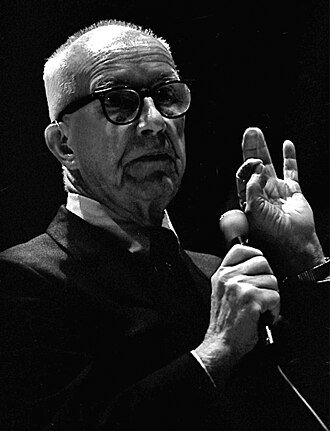 AuthorBuckminster Fuller1895–1983
Operating Manual for Spaceship Earth is a short book by the American architect, inventor and thinker R. Buckminster Fuller, published in 1969. It grew out of an address with a similar title delivered to the fiftieth annual convention of the American Planners Association at the Shoreham Hotel in Washington, D.C., on 16 October 1967. Its starting point is a simple image: the Earth as a ship travelling through space, with finite resources and no possibility of resupply. Since this ship has no user manual to guide those who crew it, Fuller offers reflections, predictions and guidance intended to help people understand, manage and sustain it, with the aim of preserving it for the future of humanity.
The argument begins with a historical reading. Fuller distinguishes two epochs. In the first, dominated by what he calls the "Great Pirates" or great outlaws, power belonged to those who held a global view of information at a time when most people lived locally. Because resources are unevenly distributed, sea trade linked previously isolated populations and gave rise to laws of its own, detached from local custom, designed to keep privileged access to those resources. According to Fuller, these pirates sustained regional rulers who served them in exchange for a share of the profits. This period brought a vast growth in the circulation of goods, services and tools, along with the first specialized training and schools. In the second epoch, the system consolidated around sovereign nations that control the planet's resources and distribution networks. Fuller regards this structure as outdated and illogical, associating it with colonization, discrimination based on birth or race, and the promotion of competing ideologies, whose outcome was the world wars.
The book also criticizes specialization, which it describes as a subtle form of servitude that fragments society and prevents people from grasping the whole. In its place Fuller proposes general adaptability and an education that reveals the connections between disciplines. He argues that automation will free people from labour as their only source of livelihood, making possible a system of life fellowships in research and experimentation for everyone no longer employed, and he suggests that among many such recipients a single valuable idea could repay the cost of all the rest. Economically, Fuller objects that accounting systems measure only physical matter and that poverty harms all of humanity by restricting its inventive capacity. For him, wealth is the progressive mastery of matter by the mind, and the world has enough resources to meet everyone's needs.
The text considers energy as well, which is neither created nor destroyed but only transformed, so the notion that the universe might run out of it seems to him obsolete; and ecology, whose central challenge is to sustain life by managing energy sustainably. Its reception was considerable in the environmental and technological movements of the late 1960s and 1970s, and the metaphor of the Earth as a spaceship became one of the most widely circulated images in contemporary ecological thought.
Themes
Other works by Buckminster Fuller
- Critical Path 1981
Original Filopedia text based on Wikipedia (en) and Wikidata.