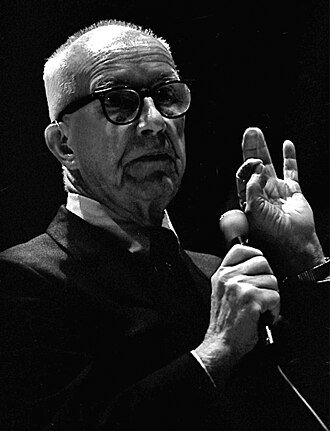
 AuthorBuckminster Fuller1895–1983
Critical Path is a book by the American inventor and thinker R. Buckminster Fuller, written with the assistance of Kiyoshi Kuromiya and first published in 1981. Alongside Operating Manual for Spaceship Earth, it is one of Fuller's best-known works. Its scope is vast: it sets out Fuller's own view of the development of human civilization and of economic history, and it presents a highly original economic ideology holding that scarcity of resources need no longer be a decisive factor in global politics.
The book is organised in three parts. The first examines the history and present state of the global economy, offering speculative accounts of humanity's origins, of the long-suppressed knowledge of the Earth's sphericity, and of how greed and international trade have shaped history. The second turns to Fuller's own intellectual journey, his personal diary and his visualisation tools, such as the Geoscope and the World Game, simulations meant to help people grasp and solve global problems. The third and most programmatic part proposes a plan to set humanity on a sustainable path, with education and a worldwide electrical grid as first priorities, and presents Fuller's architectural designs, including geodesic domes and floating cities.
The title refers to a project-planning concept, the critical path, which Fuller applies to the reorganisation of the world economy, using the Apollo Project as a reference. The work is part manifesto and part autobiography, and Fuller acknowledges in it a degree of egotism, justified by his wish to show not only his conclusions but the thought processes behind them. Its reception has been mixed: admired for its ambition and technological vision, but criticised for speculative claims that are poorly documented.
Themes
Other works by Buckminster Fuller
Original Filopedia text based on Wikipedia (en) and Wikidata.