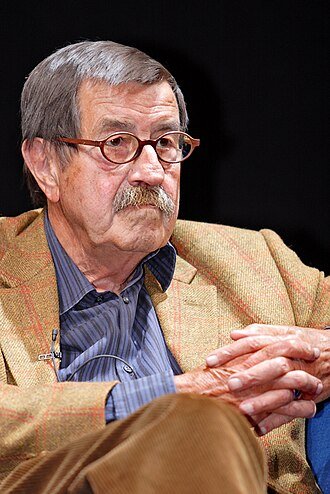
 AuthorGünter Grass1927–2015
The Rat is a 1986 novel by Günter Grass, structured as a shifting blend of fairy tale, travelogue and surreal fiction. It also includes cinematic perspectives and some poems, and it revisits narrative threads from his successful novels The Tin Drum and Crabwalk; its passages on maritime disasters, such as the sinking of the Wilhelm Gustloff, anticipate aspects of the latter.
Grass conceived the book as a counter-image to Lessing's picture of the education of the human race. Humanity has learned to eat with spoons, to use the subjunctive and to practise tolerance, but it has not learned to bring its violence under control. In the dreams of the narrator, who seems to be aboard a spaceship orbiting a devastated Earth, a talking female rat compels him to review the destruction of humanity and the dominance that rats later assume. In a world ruined by deforestation, pollution and nuclear war, the rats build a new civilization based on solidarity.
The Chernobyl disaster, a few months after publication, gave the novel an immediate topicality. It was received as an exhilarating, exhausting and profoundly disturbing work.
Themes
Other works by Günter Grass
- The Tin Drum 1959
- Cat and Mouse 1961
- Dog Years 1963
- Crabwalk 2002
- What Must Be Said
Original Filopedia text based on Wikipedia (en) and Wikidata.