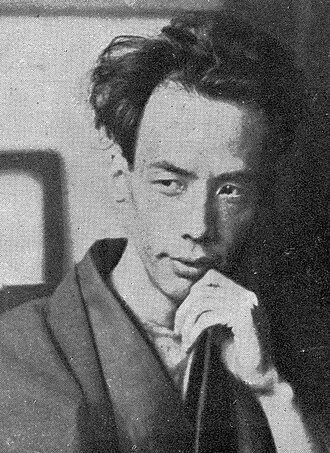
 AuthorRyūnosuke Akutagawa1892–1927
"The Nose" is a satirical short story by Ryūnosuke Akutagawa, first published in January 1916 in Shinshichō, a student magazine of Tokyo Imperial University. It was his second short story, written shortly after "Rashōmon", and was later reprinted in other magazines and in several of Akutagawa's anthologies. Its source is a tale from the Uji Shūi Monogatari, a thirteenth-century Japanese collection, which Akutagawa reworked in a style and with concerns that were distinctly his own.
The story is set in the Heian period and centres on Zenchi Naigu, a Buddhist priest whose long, drooping nose occupies nearly all of his thoughts. Naigu pretends not to care about it, fearing that someone might mention it, and spends his reading of the sutras searching for anyone with a similar feature. When a disciple reveals a method for shrinking it, Naigu agrees only after feigning indifference. The treatment succeeds, yet the people around him laugh at him more openly than before, and the bitter priest grows harsh toward those he is meant to teach. In the end he wakes one morning to find his nose restored to its original length, and his relief and delight are complete.
The tale is chiefly a reflection on vanity and egotism, which lead Naigu to place his appearance above his religious duties. Akutagawa carried modern psychological preoccupations into an ancient legend. Natsume Sōseki praised the work in a letter to the author, and the story was later admired abroad, inspiring later works such as Mario Bellatin's novella "Shiki Nagaoka: Una nariz de ficción".
Themes
Other works by Ryūnosuke Akutagawa
- Rashōmon 1915
- The Spider's Thread 1918
- Hell Screen 1918
- In a Grove 1922
- Spinning Gears 1927
Original Filopedia text based on Wikipedia (es) and Wikipedia (en) and Wikidata.