The Structure of Scientific Revolutions
essay in the history and philosophy of science · 1962
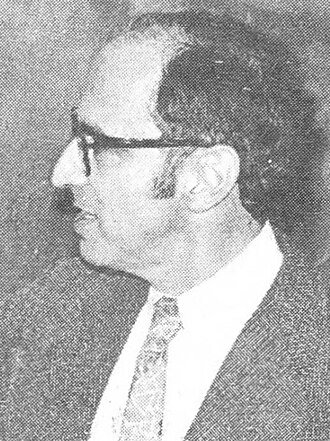 AuthorThomas Kuhn1922–1996
The Structure of Scientific Revolutions is a book published in 1962 by the American philosopher and historian of science Thomas S. Kuhn (1922–1996). Its appearance marked a landmark in the history, philosophy and sociology of science, and it popularized terms such as "paradigm" and "paradigm shift", which entered common language well beyond science.
The book first appeared as a monograph in the International Encyclopedia of Unified Science and was later published as an independent volume by the University of Chicago Press. Kuhn dated its origin to 1947, when, as a graduate student at Harvard, he was asked to teach a science course for humanities students built around historical case studies. He later recalled that until then he had never read an old scientific document. Reading Aristotle's Physics, he found its concepts of matter and motion astonishingly unlike Newton's, and concluded that they were not inferior, merely different: the insight at the root of the book. In 1969 he added a postscript replying to the criticism the first edition had provoked.
Against the view then dominant, which saw scientific progress as the steady accumulation of accepted facts and theories, Kuhn proposed an episodic model. During periods of "normal science", a community works within a shared conceptual framework, a paradigm, solving puzzles that the framework itself deems solvable. When anomalies accumulate that the paradigm cannot explain, a crisis may follow and, if a convincing alternative emerges, a revolution replaces it. Conservative scientists tend to resist, and Kuhn argued they are right to do so, since the established paradigm has been successful; acceptance of the new one usually arises from a mixture of empirical arguments, personal conviction and promises of future results, rather than from strictly determinate logic.
The work illustrates these ideas with historical cases, such as the chemistry of defined compounds and Dalton's atomism, or the Copernican revolution, which at first offered no more accurate predictions than the Ptolemaic system. Its theses provoked strong controversy: some saw them as introducing a realistic, human dimension into the heart of science, while others felt they undermined the rationality of its greatest achievements. It remains essential reading for understanding how scientific theories change.
Themes
Other works by Thomas Kuhn
Original Filopedia text based on Wikipedia (es) and Wikipedia (en) and Wikidata.