 AuthorHonorius Augustodunensis1080–1154
The Elucidarium (also Elucidarius, a name meant to suggest that it "elucidates the obscurity of various things") is an encyclopedic work on medieval Christian theology and popular belief, written in the late eleventh century by Honorius Augustodunensis. It is dated to around 1098, since the latest work by Anselm of Canterbury it mentions is Cur Deus homo, which suggests it is one of Honorius's earliest writings, composed when he was still young. Shaped by the influence of Anselm and John Scotus Eriugena, it was intended as a handbook for the lower and less learned clergy, and scholars link its compilation to the reform of English monastic life in the eleventh century.
The work takes the form of a Socratic dialogue between a disciple and his master, divided into three books. The first, "De divinis rebus," deals with God, the creation and fall of the angels, the creation and fall of humankind and the need for redemption, and the earthly life of Christ. The second, "De regis ecclesiasticis," discusses the divine nature of Christ and the founding of the Church at Pentecost, understood as the mystical body of Christ made present in the Eucharist dispensed by the Church. The third, "De futura vita," covers Christian eschatology: the Antichrist, the Second Coming, the Last Judgement, Purgatory, the torments of Hell and the joys of Heaven, all described in vivid detail. Honorius approaches this final subject with particular enthusiasm.
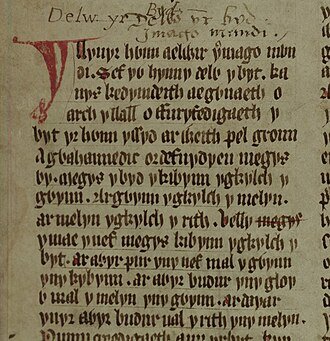
The text enjoyed enormous popularity from its composition until the end of the Middle Ages. More than three hundred manuscripts of the Latin text survive, along with numerous translations into vernacular languages, some of them adapted to new purposes, such as a Provençal version revised for compatibility with Catharism. From the sixteenth century it also circulated in printed popular chapbooks, and later versions attributed the work to a "Master Elucidarius." Among its translations, the Old Icelandic version, dated to the late twelfth century and surviving in fragments in one of the earliest Icelandic manuscripts, was especially influential on medieval Icelandic literature and culture, including the Prose Edda.
The work also incorporates many elements drawn from English folklore, which were further expanded in later editions and translations. The editio princeps of the Latin text is that of the Patrologia Latina, volume 172, published in Paris in 1895.
Themes
Original Filopedia text based on Wikipedia (en) and Wikidata.