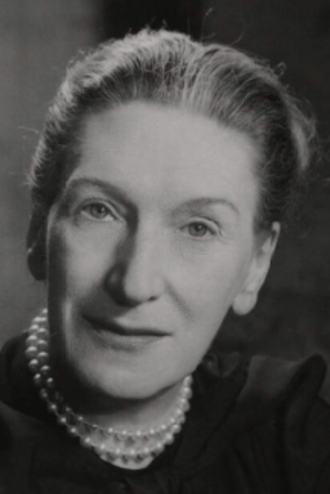
 AuthorElizabeth Bowen1899–1973
The Heat of the Day is a novel by the Anglo-Irish writer Elizabeth Bowen, first published in the United Kingdom in 1948 and in the United States the following year. Set in London in the tense years after the Blitz during the Second World War, its central theme is the inextricable knitting together of the individual and the national, the personal and the political.
The protagonist is Stella Rodney, an attractive, sophisticated and independent woman of middle age who works for a government agency. Her relationship with Robert Kelway, a man in his late thirties who was wounded at Dunkirk, is disrupted by Harrison, a British counterspy convinced that Robert is a spy for Nazi Germany. Harrison uses this suspicion to come between the lovers and offers Stella a bargain: he will keep his suspicions to himself if she leaves Robert for him. Stella finds herself caught between spy and counterspy, and her moral and emotional dilemma gives the novel its shape.
The story opens at a concert in a London park, where Louie, a young woman whose husband is away fighting, tries unsuccessfully to flirt with Harrison. Meanwhile Stella looks back on her past and attends to the affairs of her son Roderick, a young soldier who inherits Mount Morris, an Irish estate left by his late father's cousin. In Ireland, Stella recalls her youth and her marriage to Roderick's father, which ended in divorce. Back in England she asks Robert about Harrison's accusations; he denies them and proposes marriage. Later, Roderick's cousin Nettie reveals that the account Stella had given of the divorce was not the truth, a revelation that strains the bond between mother and son.
Near the end, Robert, aware that the government is closing in on him, confesses to Stella that he spies for Nazi Germany, justifying his beliefs by arguing that freedom offers humanity nothing but the chance to destroy itself. Stella is repelled by his ideas yet cannot abandon him, and he takes his own life by throwing himself from the roof of her building. The narrative then widens to cover the next two years of the war, leaving the fates of Harrison, Roderick and Louie open or ambiguous.
The novel is regarded as one of Bowen's major works and as a distinguished example of the wartime spy novel centred on the home front. Critics have praised its psychological subtlety, its dense and reflective prose, and its exploration of guilt, loyalty and moral ambiguity in wartime.
Themes
Other works by Elizabeth Bowen
- The Last September 1929
- The House in Paris 1935
- The Death of the Heart 1938
- Eva Trout 1968
Original Filopedia text based on Wikipedia (es) and Wikipedia (en) and Wikidata.