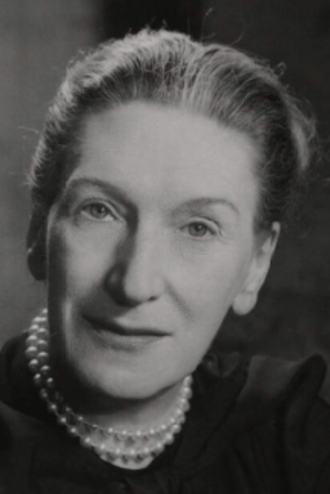
Elizabeth Bowen
1899–1973 · Anglo-Irish novelist and short story writer
Elizabeth Bowen (Dublin, 1899 – Hythe, Kent, 1973) was an Anglo-Irish novelist and short story writer who wrote in English. She is known for her books about the Big House of the Irish Protestant landed gentry and for her fiction about wartime London. In 1958 she was nominated for the Nobel Prize in Literature by the linguist Roman Jakobson. Her work, shaped by literary modernism, remains a point of reference for readers interested in the inner lives of the British and Irish middle classes.
Born in Dublin into a family of Welsh origin that had long held land in County Cork, she spent her summers at Bowen's Court, the family estate. Her father's mental illness in 1907 led her and her mother to move to England, and after her mother died in 1912 she was raised by aunts. That early sense of loss and dislocation runs through much of her fiction. She was educated at Downe House School and spent a short time at an art school in London before deciding that writing was her vocation. Her first collection of stories, Encounters, appeared in 1923, helped into print by Rose Macaulay, a friend from the Bloomsbury circle.
She married Alan Cameron in 1923, and the marriage coexisted with other relationships, most notably a long friendship with the Canadian diplomat Charles Ritchie. She inherited Bowen's Court in 1930 but lived mainly in England. During the Second World War she worked for the British Ministry of Information, and the London of those years became the setting of some of her best stories and her novel The Heat of the Day. The family house was sold and demolished in 1960, a loss that weighed on her last years. She died of lung cancer in Hythe and was buried beside her husband at Farahy.
Her fiction concerns what lies beneath respectability: betrayal, secrets, and the forces that break into an orderly life. Her prose is densely crafted and owes much to the film techniques of her day. Her legacy rests chiefly on novels such as The House in Paris and The Death of the Heart, which critics often count among the finest English novels of their era.
Key works
- The House in Paris (1935): a summer afternoon in which a child and several adults are drawn into an unspoken secret.
- The Death of the Heart (1938): the story of an orphaned adolescent confronting the hypocrisy of upper-middle-class London.
- The Last September (1929): a portrait of an Anglo-Irish family during the Irish War of Independence.
- The Heat of the Day (1949): a novel of wartime London under the bombing and of loyalties tested by war.
- Seven Winters: Memories of a Dublin Childhood (1942): her memoir of growing up in Dublin.
Where to start
The Death of the Heart is accessible and representative of Bowen: it follows Portia, a sixteen-year-old orphan who moves to London to live with relatives between the wars. Readers will find keen observation of family ties, social class and youthful loneliness.
Next: The Last September. The Last September, set in Ireland during the War of Independence, reveals the Anglo-Irish world of the author and its historical roots.
Works in Filopedia
- The Last September 1929
- The House in Paris 1935
- The Death of the Heart 1938
- The Heat of the Day 1948
- Eva Trout 1968
Original Filopedia text based on Wikipedia (es) and Wikipedia (en) and Wikidata.