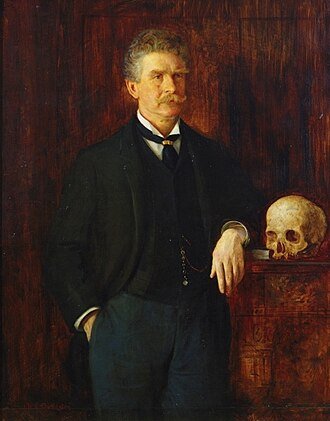
 AuthorAmbrose Bierce1842–1914
The Devil's Dictionary is a collection of satirical definitions of everyday words, written by the American journalist Ambrose Bierce over several decades. He published them in installments in newspapers and magazines, irregularly, from 1881 into the early twentieth century. He gathered them into a book in 1906 under the title The Cynic's Word Book, and a fuller edition appeared in 1911 under the title by which it is now known.
Each entry takes a common word and defines it with a corrosive irony that turns the apparent sense of things upside down. Bierce was less interested in explaining what words mean than in dismantling beliefs, social conventions, politics, religion and human vanity. Many definitions are short aphorisms; others are miniature stories or dialogues. The overall effect is a world seen in reverse, in which respectability looks like hypocrisy and contempt looks like candor.
The book was received unevenly at first and was widely imitated, often plagiarized without credit, for years. Over time, however, it gained lasting prestige. It has been quoted constantly, translated into many languages, and is now regarded as one of the most celebrated works of American satire. Bierce drew on earlier comic glossaries, but his sharper and more philosophical tone gave the book its own character. Scholars also point to the influence of the thinkers he encountered, among them the Baron d'Holbach, whose Théologie portative inspired him.
Themes
Other works by Ambrose Bierce
Original Filopedia text based on Wikipedia (es) and Wikipedia (en) and Wikidata.