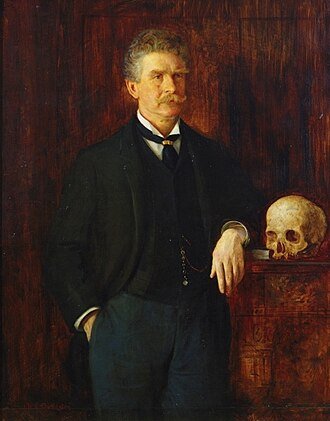
 AuthorAmbrose Bierce1842–1914
Tales of Soldiers and Civilians is a collection of short stories by Ambrose Bierce, also published as In the Midst of Life. It bears a stated date of 1891, although it actually appeared in early 1892. Its stories recount unusual episodes in the lives of soldiers and civilians during the American Civil War, blending horror, humour and satire in a bleak picture shaped by violence, isolation and the constant threat of madness.
Bierce knew the war at first hand. At the outbreak of hostilities he enlisted in an Indiana regiment, fought in western Virginia and at Shiloh, an experience that left a deep mark on him, and later served as a mapmaker on the staff of General William Babcock Hazen. That experience feeds these tales, which turn away from heroic battles and famous commanders to focus on ordinary people trapped and helpless within the machinery of war. Against the romantic glory of the dime novels of the period, his stories show shattered bodies and the brutality of the conflict.
Publication was difficult. According to the preface of the first edition, the country's leading publishers refused to print it, and the book came out thanks to E. L. G. Steele, a San Francisco merchant. In 1898 G. P. Putnam's Sons reissued it with other stories under the title In the Midst of Life, and later editions grew in number of tales, while Bierce moved several supernatural pieces into another collection, Can Such Things Be? Sixteen of the stories had first appeared in the San Francisco Examiner.
The book is divided into two sections, Soldiers and Civilians, and each story often begins in the middle of the action, withholding key details until an ending that tends to surprise. Among its best-known titles is "An Occurrence at Owl Creek Bridge", included in this collection.
Contemporary reception was mixed. The New York Tribune found them so original as to defy comparison, and they are often set beside Stephen Crane's The Red Badge of Courage, another novel of the same war. Over time the Grolier Club named the book one of the hundred most influential American books printed before 1900. Its unsentimental view of war anticipates Hemingway's, and its tales of civilians influenced later horror fiction.
Themes
Other works by Ambrose Bierce
Original Filopedia text based on Wikipedia (es) and Wikipedia (en) and Wikidata.