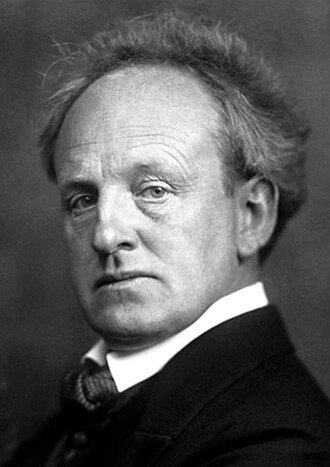
 AuthorGerhart Hauptmann1862–1946
The Rats is a stage drama in five acts by the German dramatist Gerhart Hauptmann, first staged in 1911, a year before the author won the Nobel Prize in Literature. Unlike some of his other plays, such as The Weavers (1892) or The Assumption of Hannele (1893), it does not appear ever to have been performed on Broadway.
The action unfolds in Berlin, in the late nineteenth or early twentieth century. Jette John, housekeeper to Harro Hassenreuter, a former theatre manager, persuades the unmarried, pregnant servant Pauline to forget a worthless lover. Jette, who lost her own baby three years earlier, offers to raise Pauline's child, but once the boy is born and his hair matches that of her dead son, she decides to keep him as her own. As the authorities become involved, Jette resorts to ever more desperate measures to hide the truth, until her lies collapse entirely.
Alongside this story runs the romance between Walpurga, Hassenreuter's daughter, and Erich Spitta, her tutor, an aspiring actor and playwright. Their conflict, and Hassenreuter's hostility toward new artistic currents, reflect the social and moral tensions of Wilhelmine Germany. Hauptmann uses the image of rats gnawing at the foundations of society and art as a metaphor for corruption.
The play has been adapted several times for film and television, including Robert Siodmak's 1955 version with Maria Schell and Curd Jürgens.
Themes
Other works by Gerhart Hauptmann
- The Weavers 1892
- The Assumption of Hannele 1893
Original Filopedia text based on Wikipedia (en) and Wikidata.