Law, Legislation and Liberty
three-volume treatise on social and political philosophy
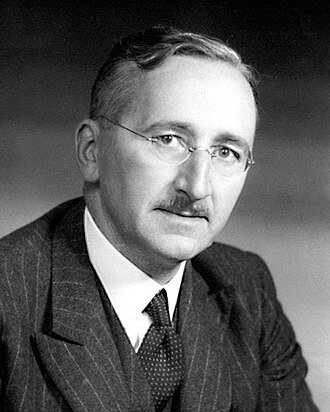 AuthorFriedrich Hayek1899–1992
Law, Legislation and Liberty is the mature work of Nobel laureate economist and political philosopher Friedrich Hayek. Although it is often associated with economics, it is primarily a work of social philosophy in which Hayek develops and refines the principles he had already discussed in The Road to Serfdom and The Constitution of Liberty. Written over roughly fifteen to twenty years, largely while he was at the University of Freiburg im Breisgau, it appeared in three volumes between 1973 and 1979. Unlike The Road to Serfdom, it is not aimed at a general readership: it is more abstract and demanding.
The central theme is the contrast between two ways of understanding society. One is the made order, or taxis, deliberately designed by a will. The other is the grown or spontaneous order, or cosmos, which emerges from the interaction of countless individuals without anyone planning it. Each view corresponds to a conception of law: legislation, the product of explicit decisions by a lawmaker (thesis), and law proper (nomos), made up of general and abstract rules that have gradually evolved and that sustain individual liberty. For Hayek, law comes before and exceeds legislation, and attempts to subordinate it to the will of majorities endanger the rule of law.
His argument rests on an epistemology stressing the limits of human knowledge: no single mind can grasp the complexity of a modern society, and the market, understood as catallaxy or free exchange, coordinates the actions of strangers pursuing different ends without central planning. From this he criticises the notion of 'social justice' as distributive justice, which he considers incompatible with a market order, and the drift of democracy toward what he calls the tyranny of the majority. In its place he proposes 'demarchy', a system close to liberal democracy that limits power and separates legislation from government. The work closes with an epilogue on the three sources of human values. It has been widely read by liberals and libertarians and has influenced constitutional debate and the theory of spontaneous order.
Themes
Other works by Friedrich Hayek
Original Filopedia text based on Wikipedia (es) and Wikipedia (en) and Wikidata.