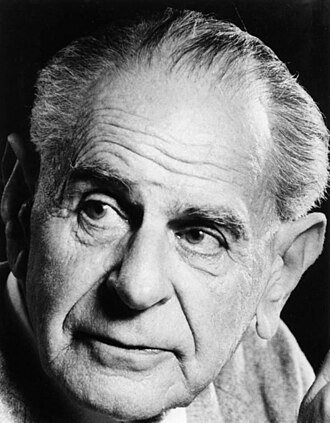
 AuthorKarl Popper1902–1994
Unended Quest: An Intellectual Autobiography is a 1976 book by the philosopher Karl Popper. The work first appeared under the title "Autobiography of Karl Popper" in The Philosophy of Karl Popper (1974), part of the Library of Living Philosophers series, and was later published as a standalone book.
The book chronicles Popper's life from the beginning and sets out the wider implications he drew from his experiences. In the first chapter, "Omniscience and Fallibility," he describes his apprenticeship to a cabinetmaker while he was a university student. His master invited him to ask anything he liked, since, with due modesty, he claimed to know everything. Popper writes that from this "omniscient master" he learned more than from his university teachers: he became a disciple of Socrates and came to understand how little he knew.
Other thematic chapters address music, education, the philosophical problems Popper encountered, and his differences from other philosophers, both earlier and contemporary. These are woven into an account of the events of his life and of the research programmes he developed. Chapter 24, for example, discusses two of his best-known works, The Open Society and Its Enemies and The Poverty of Historicism, and the origins of "critical rationalism," the approach he espoused.
Themes
Other works by Karl Popper
Original Filopedia text based on Wikipedia (en) and Wikidata.