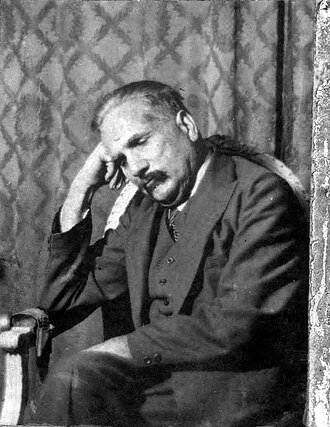
 AuthorMuhammad Iqbal1877–1938
Bang-e-Dara, whose title can be rendered as "The Call of the Marching Bell", was published in 1924 and is the first Urdu philosophical poetry book by the South Asian Islamic philosopher and poet Muhammad Iqbal. Its poems were written over a period of twenty years, and the collection is divided into three parts. The title refers to a bell that was rung in earlier times to awaken travellers and signal that it was time to move on; the book aims to awaken the Muslims of Hindustan and remind them that the time has come to move forward.
The first section gathers poems written before 1905, the year Iqbal left British India for England. It includes nursery, pastoral and patriotic verses, among them "Tarana-e-Hindi" ("The Song of India"), which became an anthem and is sung at national events. The second section, covering 1905 to 1908, when he studied in Europe, praises Western rationality and pragmatism but laments its materialism, loss of spirituality and narrow patriotism, and strengthens his belief in the universal values of Islam.
The third section, written between 1908 and 1923, reminds Muslims of their past glory and calls for a brotherhood that transcends territorial boundaries, urging a life of service to God, sacrifice and action. Poems such as "Shikwa" and "Jawab-i-Shikwa" are considered among the greatest Islamic poems. Love and the self are recurring themes throughout the book.
Themes
Other works by Muhammad Iqbal
- The Secrets of the Self 1915
- Message from the East 1923
- Persian Psalms 1927
- Javid Nama 1932
- The Reconstruction of Religious Thought in Islam
- Zarb-i-Kalim (The Rod of Moses)
- Armaghan-i-Hijaz
- Baal-e-Jibril (Gabriel's Wing)
- What should then be done O people of the East
- The Development of Metaphysics in Persia
Original Filopedia text based on Wikipedia (en) and Wikidata.