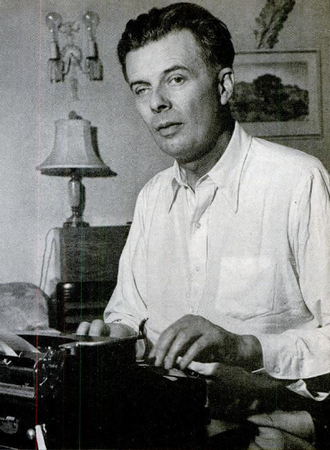
 AuthorAldous Huxley1894–1963
Antic Hay is a novel by Aldous Huxley, published in 1923 and set in London. It offers a satirical portrait of an aimless or self-absorbed cultural elite in the bleak and turbulent years after the end of the First World War. Huxley wrote it shortly after he and his wife moved to Italy, where they lived from 1923 to 1927.
The story follows Theodore Gumbril, a teacher at an English boarding school who invents trousers with a pneumatic cushion in the seat, Gumbril's Patent Small-Clothes. His quest for love sometimes leads him to adopt "The Complete Man," a disguise built around a false full beard that lets him overcome his shyness and approach women in public places with bold directness. The difficulty is then how to reveal his real self to the women he befriends.
A 1923 review called it probably the most brilliant novel of the year, and a 1961 scholarly article described its theme as disunity, disorder and disorganization. The book was condemned for its cynicism and supposed immorality because of its open discussion of sex, and it was banned for a while in Australia and burned in Cairo. The title comes from a line in Christopher Marlowe's Edward II.
Themes
Other works by Aldous Huxley
- Crome Yellow 1921
- Those Barren Leaves 1925
- Brave New World 1932
- Eyeless in Gaza 1936
- After Many a Summer 1939
- The Perennial Philosophy 1944
- Ape and Essence 1948
- The Doors of Perception 1954
- Heaven and Hell 1956
- Brave New World Revisited 1958
- Island 1962
Original Filopedia text based on Wikipedia (en) and Wikidata.