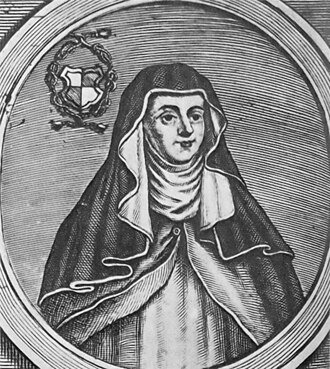
 AuthorHrotsvitha935–968
Abraham is a play in Latin written by Hrotsvit of Gandersheim, a Saxon canoness of the tenth century who lived at the abbey of Gandersheim, where she had access to its extensive library. It belongs to the six dramatic works she wrote, which were influenced by the Roman comic playwright Terence, whom she acknowledges in the preface to her plays as a model she chose to imitate.
The play follows Mary, a young orphan whose uncle Abraham, a hermit, takes her in and, together with his companion Effrem, persuades her to lead a life of chastity and devotion to God. Mary, however, yields to temptation, loses her virginity, and abandons her religious life to become a prostitute. Years later Abraham comes to her in disguise as a lover in order to bring her back to her faith, and Mary returns to a life of devotion, submitting herself to a strict regimen of penance. The work is generally read as a meditation on divine forgiveness and the power of redemption.
In structure, the play is divided into nine scenes that move between the hermitage, the inn and the cell, and in which the characters discuss purity, sin and grace. Its central idea is that the sinner is not the one who falls but the one who fails to rise again, and that trust in God's mercy is the way back.
The play is valued above all as a distinctive example of medieval drama written by a woman, and it is often cited as a precursor of later religious theatre.
Themes
Other works by Hrotsvitha
- Dulcitius 1501
- Paphnutius 1501
Original Filopedia text based on Wikipedia (en) and Wikidata.