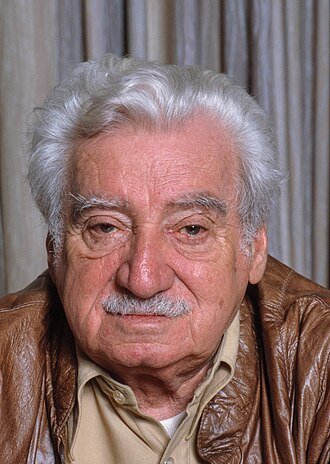
 AuthorJorge Amado1912–2001
Tereza Batista: Home from the Wars is a Brazilian modernist novel by Jorge Amado, one of the most widely read Brazilian writers of the twentieth century and a member of the Brazilian Academy of Letters. It was first published in Brazil in 1972 and appeared in English in 1975, in a translation by Barbara Shelby. It became the best-selling novel in Brazilian literary history, outselling even Dona Flor and Her Two Husbands. In 1976 it received Italy's Premio Lila, and it was later adapted into a play and a television series.
The story is set in Bahia and follows Tereza, a mixed-race girl of thirteen who is sold by her aunt to a landowner, Colonel Justiniano Duarte da Rosa, who treats her as property and sexually abuses her. She loves Januario, a sertanejo from the Northeast who becomes a sailor, and for much of the book she waits for their reunion as her only hope of escape. After defending herself with a knife against the landowner's violence, she ends up in prison and later in a brothel. Her journey takes her through Sergipe and Salvador, where love, disease, solidarity among prostitutes and the fight for their rights all come together.
The novel is deliberately fragmented. It is divided into five parts and does not follow chronological order: it opens with a later stage of Tereza's life and interweaves scenes from the past, in a voice that recalls oral storytelling, popular poetry and folklore. One chapter seems to be told by a different narrator, offering a distinct view of the protagonist. The scenes are often raw, with torture, murder and sexual violence, and they coexist with surreal and fantastical elements, such as the werewolf legends drawn from Afro-Brazilian popular tradition.
Critics usually place the book in the later phase of Amado's career, which celebrates Brazilian sensuality, candomblé and the life of Bahia's poor more than it denounces exploitation as his earlier novels did. For the author, Tereza was meant to be a third image of the Brazilian woman, alongside Gabriela and Dona Flor, though how far she truly differs from them is debated. The novel has also been read as an allegory of the Brazilian people.
Themes
Other works by Jorge Amado
Original Filopedia text based on Wikipedia (es) and Wikipedia (en) and Wikidata.