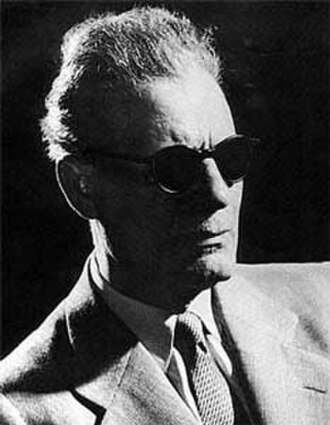
 AuthorTaha Hussein1889–1973
On Pre-Islamic Poetry is a work of literary criticism published in 1926 by the Egyptian author Taha Hussein. In it, Hussein argued that pre-Islamic Arabic poetry, then believed to come from the period before Islam, was in fact later and had been fabricated after the arrival of Islam. According to his argument, much of what is called pre-Islamic literature reflected not the life of the Arabs before Islam but the interests, inclinations and desires of Muslims. Hussein examined the corpus according to scientific principles and also cast doubt on the authenticity of parts of the Quran, in particular the story of Abraham and Ishmael and the building of the Ka'bah, which he considered invented to serve the interests of the Quraysh tribe.
The book rested on several arguments: the poetry was, at the earliest, committed to writing in the mid-8th century, after about two centuries of oral transmission, and political motives, chiefly linked to the Quraysh, had driven the forgery. As evidence, Hussein pointed out that the dialectal variation that should have existed among the supposed poets is absent from the texts, which reflect a single Arabic dialect. The publication sparked one of the two major controversies of Egyptian intellectual life in the 1920s. It was withdrawn and reissued in 1927 as On Pre-Islamic Literature, with the passages on the Quran removed. Because of the reaction, Prime Minister Ismail Sidky removed him in 1932 as dean of the literature department at the University of Cairo, but the university head Ahmed Lutfi el-Sayed supported him and refused his resignation, and he regained his post in 1936. At least five books were written in response.
In the West, the most immediate reply came in 1926 from Erich Bräunlich, who rebutted the forgery thesis by noting the absence of political interests or mention of Islam in the poetry and a broad vocabulary barely overlapping with that of the Quran. In the following decades, the question of authenticity was largely considered settled among Western scholars. Later advances in the study of oral tradition, especially Milman Parry and Albert Lord's theory of oral-formulaic composition, have also superseded some of Hussein's proposals.
Themes
Other works by Taha Hussein
Original Filopedia text based on Wikipedia (en) and Wikidata.