The Narrow Road to the Deep North
travel diary in haibun form (prose and haiku) · 1702
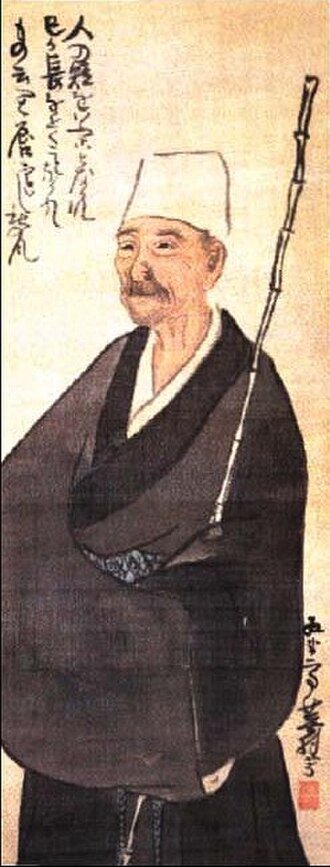 AuthorMatsuo Bashō1644–1694
Oku no Hosomichi, whose title translates roughly as "the narrow road to the interior", is the best-known work of the Japanese poet Matsuo Bashō (1644-1694) and one of the foundational texts of Japanese literature in the Edo period. It takes the form of a travel diary in which prose alternates with verse, a genre known as haibun. The first edition was published posthumously, in 1702.
The account records an arduous and dangerous journey on foot that Bashō undertook in the spring of 1689 with his companion Kawai Sora. They set out from Edo, today's Tokyo, towards the northern interior region known as Oku. Bashō wished to see the places about which earlier poets had written, and he was in particular emulating Saigyō, whom he regarded as the greatest waka poet. The journey lasted about 156 days and covered thousands of kilometres, mostly on foot.
The text blends its travel narrative with allusions to Confucius, Saigyō, Du Fu and classical Chinese poetry, and even to The Tale of the Heike. Bashō spent five years revising its poems and prose before publication, and differences from Sora's diary show that he took considerable artistic liberties in writing it. Its influence has been immense, both on later literature and on readers who have tried to retrace his steps.
Themes
Other works by Matsuo Bashō
Original Filopedia text based on Wikipedia (es) and Wikipedia (en) and Wikidata.